Refine
Estimated Years 1920-1929Clear
2,678 results foundRefine Search
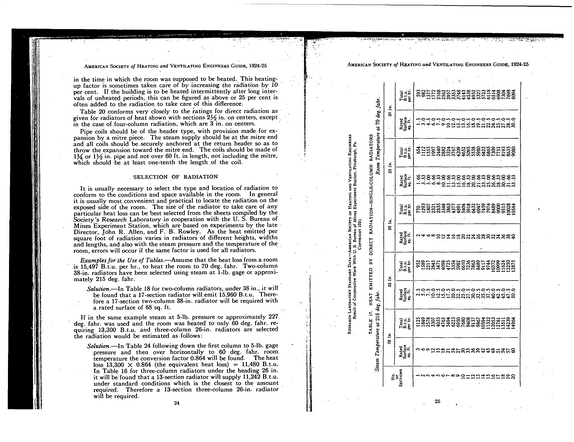
American Society of Heating and Ventilating Engineers Guide, 1924-25 in the time in which the room was supposed to be heated.
refid# MJV4dDNGRnwO90pk7BBr2X50k1 page
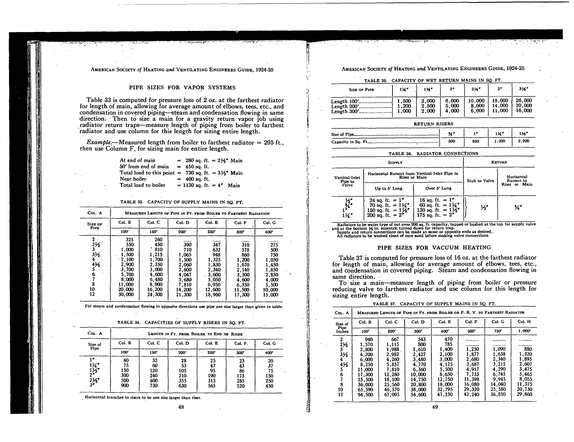
American Society of Heating and Ventilating Engineers Guide, 1924-25 PIPE SIZES FOR VAPOR SYSTEMS Table 33 is computed for pressure loss of 2 oz. at the farthest radiator for length of main, allowing for average amount of elbows, tees, etc., and condensation in covered piping--steam and condensation .flowing in same direction.
refid# qmD0gRpZXOz3Qokd5YJanEJoR1 page
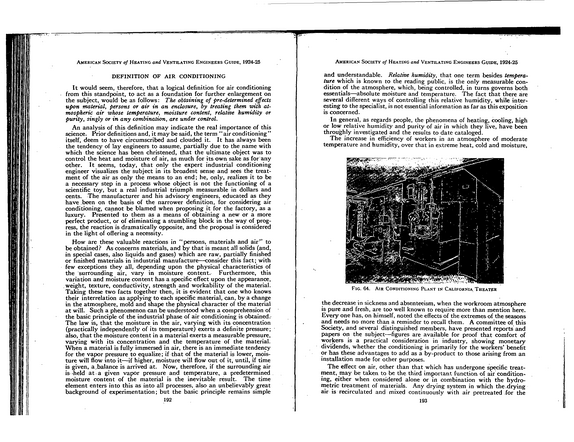
American Society of Heating and Ventilating Engineers Guide, 1924-25 DEFINITION OF AIR CONDITIONING It would seem, therefore, that a logical definition for air conditioning from this standpoint, to act as a foundation for further enlargement on the subject, would be as follows: The obtaining of pre-determined effects upon material, persons or air in an enclosure, by treating them with at mospheric air whose temperature, moisture content, relative humidity or purity, singly or in any combination, are under control.
refid# X7pMk2M055DM8b8LNadw2eo6d1 page
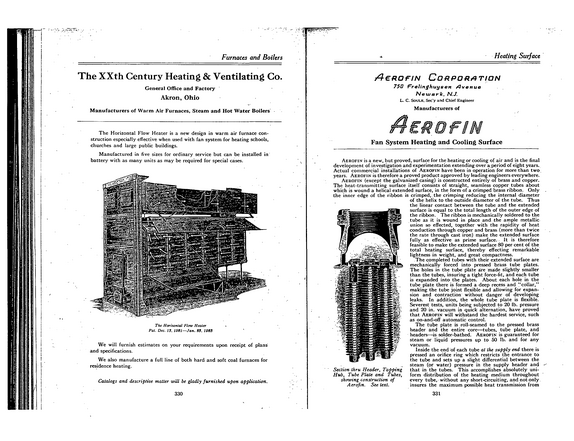
I Furnaces and Boilers The XXth Century Heating & Ventilating Co.
refid# 2JE5JENaJ5Lp7KergzmmrGw251 page
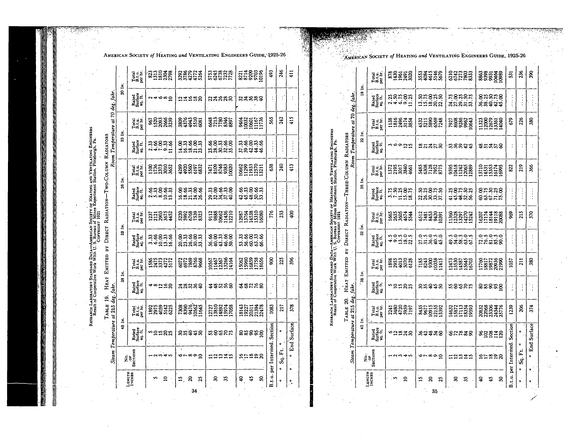
American Society of Heating and Ventilating Engineers Guide,'1.925-26 ',rCoN r-o< -h O Ooo' OO--cloMo-HOCcNoCt-N.
refid# nkppZwGVaxeONVrJmKXK831XG1 page
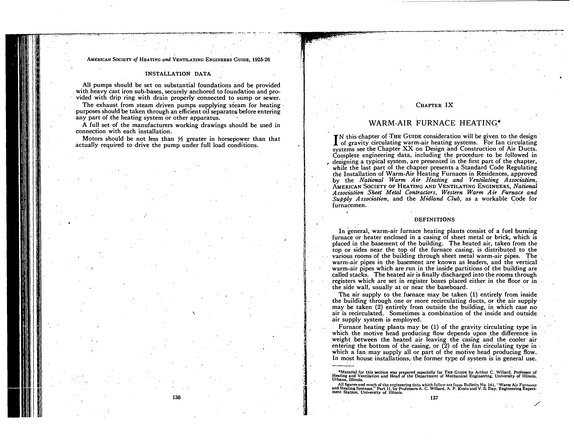
American Society of Heating and Ventilating Engineers Guide, 1925-26 INSTALLATION DATA All pumps should be set on substantial foundations and be provided with heavy cast iron sub-bases, securely anchored to foundation and pro vided with drip ring with drain properly connected to sump or sewer.
refid# 3Q6adxrn72ZDNKLowvEw8paDE1 page
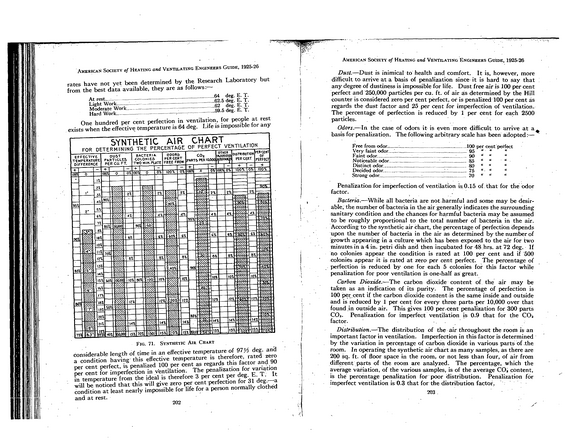
American Society of Heating and Ventilating Engineers Guide, 1925-26 rates have not yet been determined by the Research Laboratory but from the best data available, they are as follows:-- At rest........ ...................................................... 64 deg.
refid# regBONjyr4L2wgkMxQ1zGdxkJ1 page
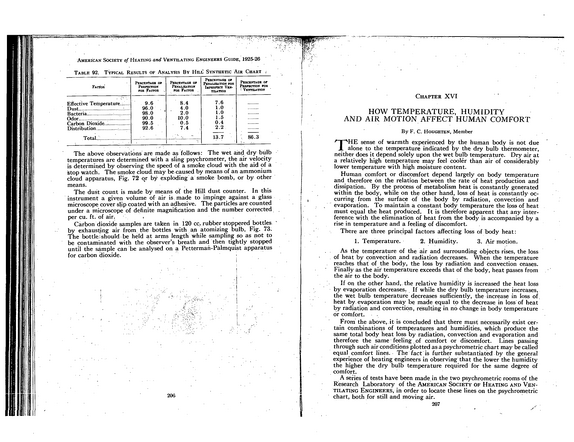
American Society of Heating and Ventilating Engineers Guide, 1925-26 Table 92.
refid# 7MN7qnMwEBZgKjzJ5kXL6RYvV1 page
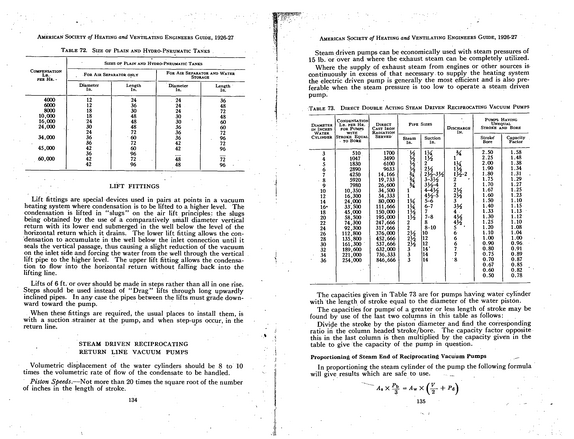
American Society of Heating and Ventilating Engineers Guide, 1926-27 Table 72.
refid# BR53xGX4GQaw5dJ2k2wvbNev81 page
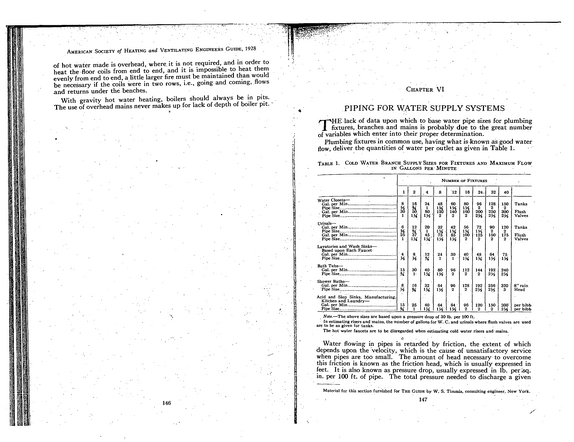
American Society of Heating and Ventilating Engineers Guide, 1928 of hot water made is overhead, where, it is not required, and in order to heat the floor coils from end to end, and it is impossible to heat them evenly from end to end, a little larger fire must be maintained than would be necessary if the coils were in two rows, i.e., going and coming, flows and returns under the benches.
refid# e7yVrEpZXdK86jEqddege5GJm1 page
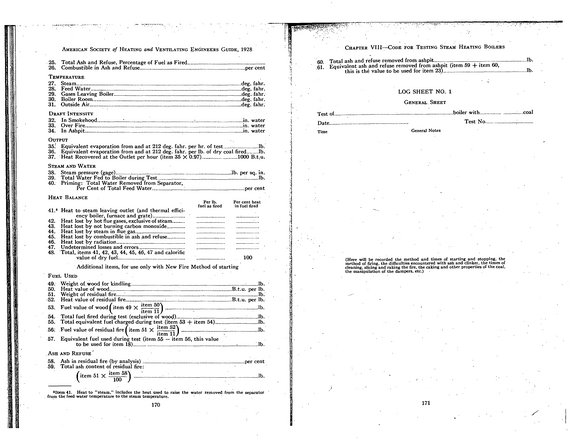
American Society of Heating and Ventilating Engineers Guide, 1928 25.
refid# K6KaX8jEDpRBLNob7Y0xBvvEX1 page
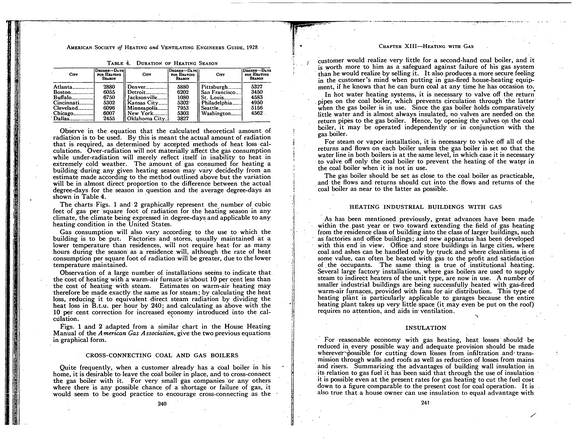
American Society of Heating and Ventilating Engineers Guide, 1928 Table 4.
refid# vxkgNGXrNrKy8yXzzQa5jGg81 page
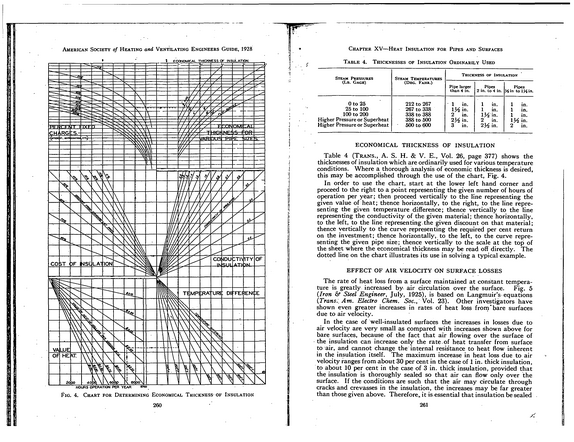
American Society of Heating and Ventilating Engineers Guide, 1928 260 Chapter XV--Heat Insulation for Pipes and Surfaces Table 4.
refid# 6ROE9kN6572pv8ZbmarjVgyJ91 page
Sr.
refid# N3R3XQXp0y7ze9DQD3nJr2EQ1 page
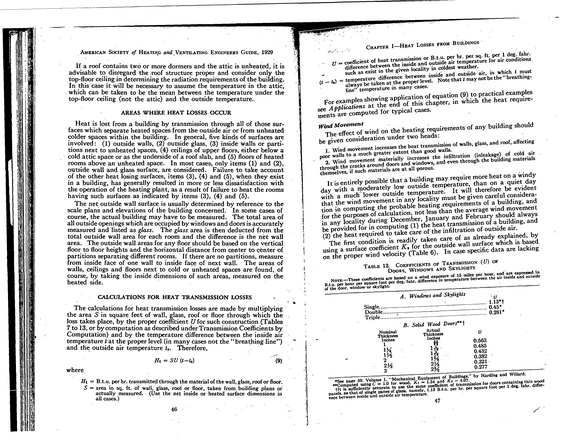
American Society of Heating and Ventilating Engineers Guide, 1929 If a roof contains two or more dormers and the attic is unheated, it is advisable to disregard the roof structure propter and consider only the top-floor ceiling in determining the radiation requirements of the building.
refid# re7D8jV5eDRnoQxZbKve0EnGV1 page