
refid# pBq4ozKVYMby2kj2bzv4gyoRE2 pages
Telakkakatu 6, P.O.
refid# rpbwMY7xE2NzDB1V7ymqYpdnJ2 pages
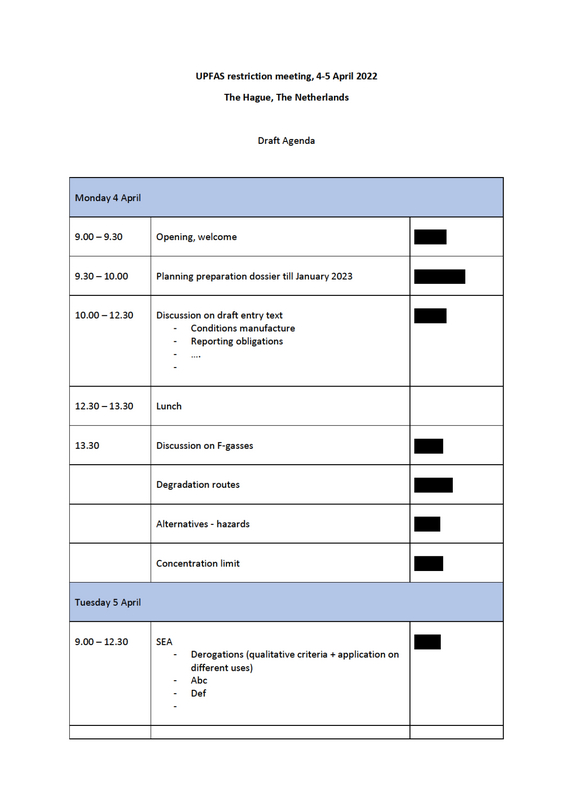
12.30 - 13.30 Lunch 13.30 - 14.00 Wrap-up

refid# npExkmXGdDZrqd9wokbO2oOwm2 pages
refid# aBaRgoaJXyjvYqL57p8eZy6vN1 page
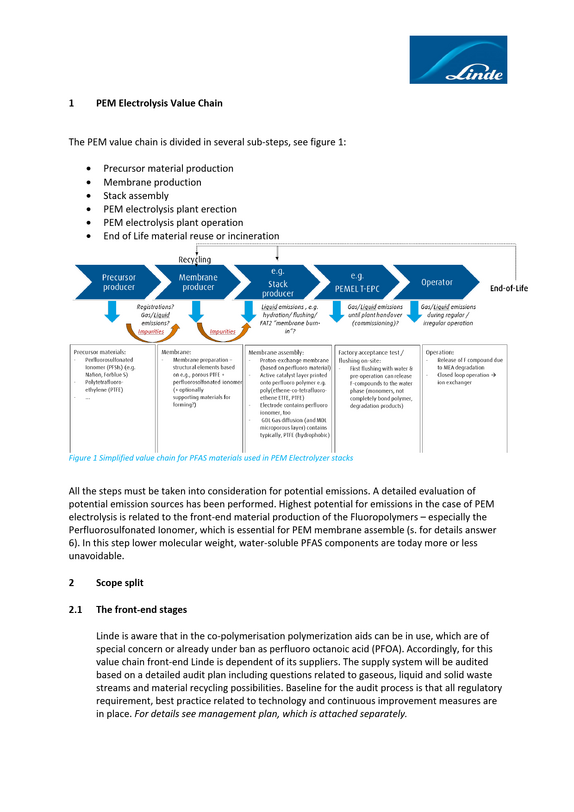
PFAS Value Chain for PEM Electrolysis - Non-confidential information - Summary: This report describes the PFAS material category related value chain as applicable to PEM Electrolysis.
refid# k9kRz0BGVZXZxEkxzVk2L0OR03 pages
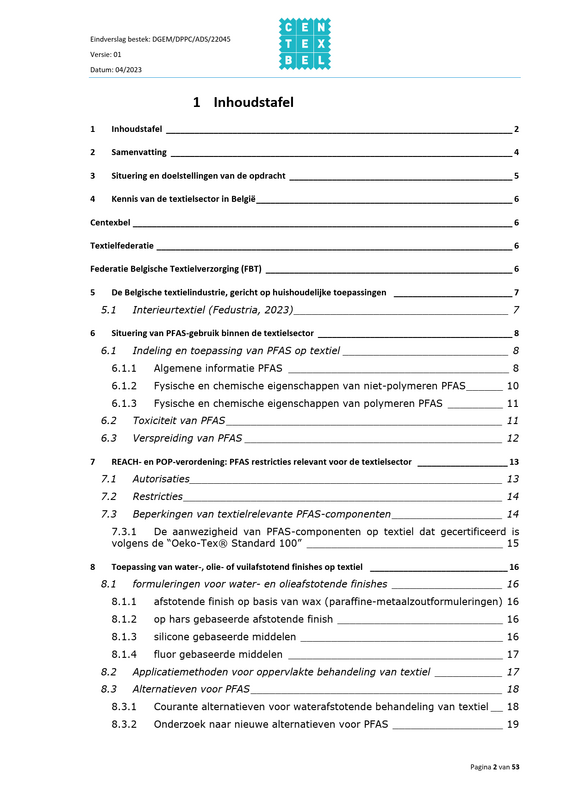
Eindverslag bestek: DGEM/DPPC/ADS/22045 Versie: 01 Datum: 04/2023 FOD VVVL - Galileelaan 5/2 - 1210 Brussel, Belgi Besteknummer DGEM/DPPC/ADS/22045 PFAS-gebruik in de Belgische Huishoudtextielindustrie Opgemaakt door CENTEXBEL Pagina 1 van 53 Eindverslag bestek: DGEM/DPPC/ADS/22045 Versie: 01 Datum: 04/2023 1 Inhoudstafel 1 Inhoudstafel _________________________________________________________________________ 2 2 Samenvatting ________________________________________________________________________ 4 3 Situering en doelstellingen van de opdracht _______________________________________________ 5 4 Kennis van de textielsector in Belgi______________________________________________________ 6 Centexbel ________________________________________________________________________________ 6 Textielfederatie ___________________________________________________________________________ 6 Federatie Belgische Textielverzorging (FBT) ____________________________________________________ 6 5 De Belgische textielindustrie, gericht op huishoudelijke toepassingen _________________________ 7 5.1 Interieurtextiel (Fedustria, 2023) ___________________________________ 7 6 Situering van PFAS-gebruik binnen de textielsector _________________________________________ 8 6.1 Indeling en toepassing van PFAS op textiel ___________________________ 8 6.1.1 Algemene informatie PFAS ____________________________________ 8 6.1.2 Fysische en chemische eigenschappen van niet-polymeren PFAS______ 10 6.1.3 Fysische en chemische eigenschappen van polymeren PFAS _________ 11 6.2 Toxiciteit van PFAS _____________________________________________ 11 6.3 Verspreiding van PFAS __________________________________________ 12 7 REACH- en POP-verordening: PFAS restricties relevant voor de textielsector ___________________ 13 7.1 Autorisaties___________________________________________________ 13 7.2 Restricties ____________________________________________________ 14 7.3 Beperkingen van textielrelevante PFAS-componenten __________________ 14 7.3.1 De aanwezigheid van PFAS-componenten op textiel dat gecertificeerd is volgens de "Oeko-Tex Standard 100" ________________________________ 15 8 Toepassing van water-, olie- of vuilafstotend finishes op textiel _____________________________ 16 8.1 formuleringen voor water- en olieafstotende finishes __________________ 16 8.1.1 afstotende finish op basis van wax (paraffine-metaalzoutformuleringen) 16 8.1.2 op hars gebaseerde afstotende finish ___________________________ 16 8.1.3 silicone gebaseerde middelen _________________________________ 16 8.1.4 fluor gebaseerde middelen ___________________________________ 17 8.2 Applicatiemethoden voor oppervlakte behandeling van textiel ___________ 17 8.3 Alternatieven voor PFAS _________________________________________ 18 8.3.1 Courante alternatieven voor waterafstotende behandeling van textiel __ 18 8.3.2 Onderzoek naar nieuwe alternatieven voor PFAS __________________ 19 Pagina 2 van 53 Eindverslag bestek: DGEM/DPPC/ADS/22045 Versie: 01 Datum: 04/2023 9 PFAS in de (textiel)afvalfase ___________________________________________________________ 20 10 Gebruik van PFAS bij huishoudtextiel op de Belgische en Europese markt ____________________ 21 10.1 Bevraging bij leveranciers van chemicalin __________________________ 22 10.1.1 Gebruik van PFAS bij chemicalinleveranciers ____________________ 23 10.1.2 Conclusie _________________________________________________ 25 10.2 Bevraging bij producenten en loonwerkers __________________________ 26 10.2.1 PFAS-gebruik binnen de tapijtsector ____________________________ 27 10.2.2 PFAS-gebruik bij productie van meubelstoffen ____________________ 28 10.2.3 PFAS-gebruik bij de productie van huishoudelijk linnen _____________ 28 10.2.4 PFAS-gebruik bij de productie van Passementerie _________________ 28 10.2.5 PFAS-gebruik bij productie van decoratieve stoffen ________________ 29 10.2.6 PFAS-gebruik bij de productie van Matrasbeschermers _____________ 30 10.3 Bevraging bij traders van textielmaterialen __________________________ 31 11 Besluitvorming ______________________________________________________________________ 33 11.1 PFAS-gebruik voor huishoudtextiel_________________________________ 33 11.2 Textiel voor professionele doeleinden ______________________________ 34 11.3 Textielverzorging ______________________________________________ 34 12 Bronvermelding _____________________________________________________________________ 35 13 Bijlagen ____________________________________________________________________________ 36 Bijlage 1 - PFAS-componenten die zijn opgenomen in de "Kandidaatslijst van zeer zorgwekkende stoffen voor autorisatie" _________________________________________________________________________ 37 Bijlage 2 - Vragenlijst Chemicalin leveranciers _______________________________________________ 38 Bijlage 3 - Vragenlijst Productiebedrijven ____________________________________________________ 41 Bijlage 4 - Vragenlijst Traders _______________________________________________________________ 47 Bijlage 5 - Factsheet Oeko-Tex Standard 100 _________________________________________________ 52 Pagina 3 van 53 Eindverslag bestek: DGEM/DPPC/ADS/22045 Versie: 01 Datum: 04/2023 2 Samenvatting Poly - en perfluoralkylverbindingen (PFAS) kenden in het verleden een ruime toepassing binnen de textielindustrie omwille van de water- en vuilafstotende eigenschappen die ze kunnen genereren.
refid# wDbXgz9MmEoenaqYrqQ2xYR4V53 pages
Classification: General Business Use SHPP's Inputs to the Public Consultation Comments to Annex XV PFAS Restriction Proposal Question number 6: Missing uses: PTFE Used as Internally Lubricated Thermoplastic Compounds for Medical Devices Executive Summary SABIC's Specialties business (SHPP) produces a range of highly differentiated products, including high-performance thermoplastics, compounds, and additives that meet complex thermal, mechanical, optical, and electrical property requirements.
refid# K6Oe4Z5Ozokkn2QXY0x60qZn21 page
Apr 25, 2023 Comment on Proposed Restriction of PFAS Conference of Fluoro-Chemical Product Japan (FCJ) On behalf of chemical manufacturers, we, Conference of Fluoro-Chemical Product Japan (FCJ), have been working tirelessly to comply with national chemical regulations.
refid# mB1MXLK9rJNMm53q6YwxyoV0O9 pages
Attachment 1: Non-confidential attachment to the Contribution by Wacker Chemie AG to the Public Consultation on the Restriction Proposal of PFAS under REACH Regarding consultation form para 6, Missing uses Generally, the use of polymeric PFAS substances (fluoropolymers) in chemical plant engineering (gaskets, pipe and reactor inliners, valves, pumps and other devices) is missing.
refid# rpN1QRVNBgxp6be9kx5xn88802 pages
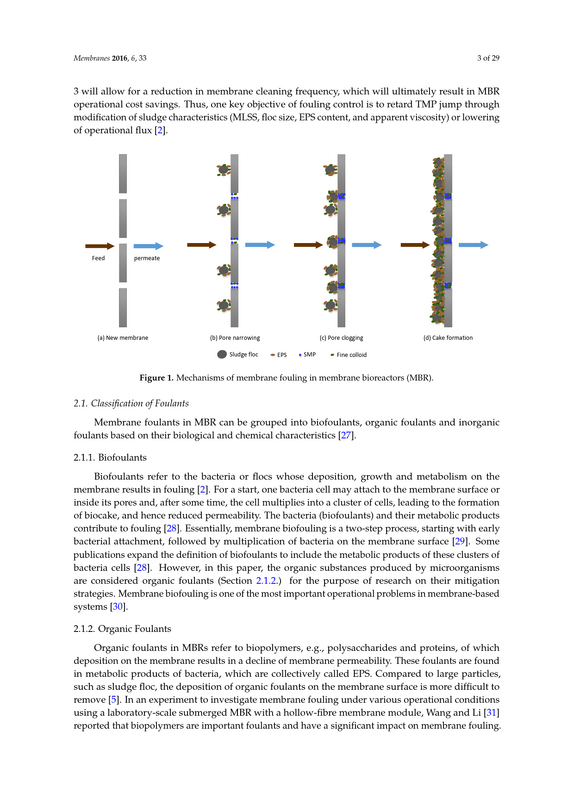
membranes MDPI Review Membrane Bioreactor (MBR) Technology for Wastewater Treatment and Reclamation: Membrane Fouling Oliver Terna Iorhemen *, Rania Ahmed Hamza and Joo Hwa Tay Department of Civil Engineering, University of Calgary, Calgary, AB T2N 1N4, Canada; @ucalgary.ca (R.A.H.); Ml@ucalgary.ca (J.H.T
refid# 6bE7vr5VVykzQ80r0yB7pJ8qg29 pages
rHHIIII iniiiI 1111 Seeaaliinng Association e.V.
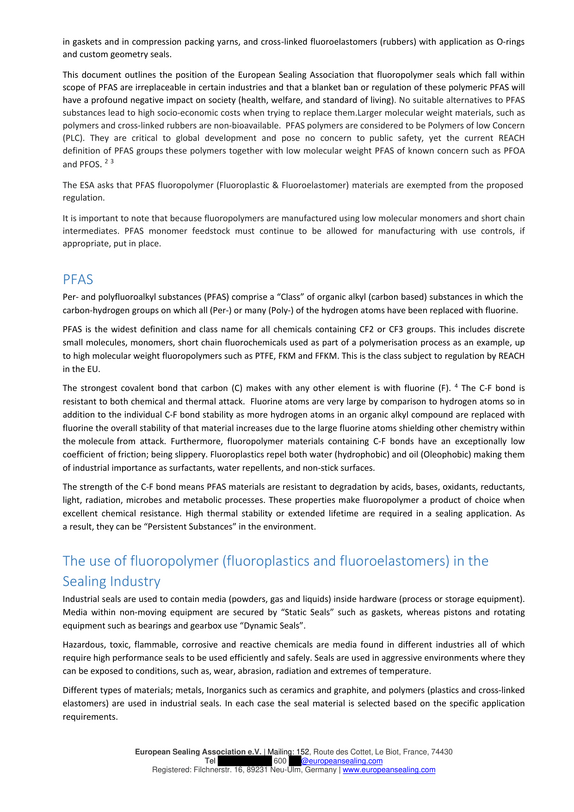
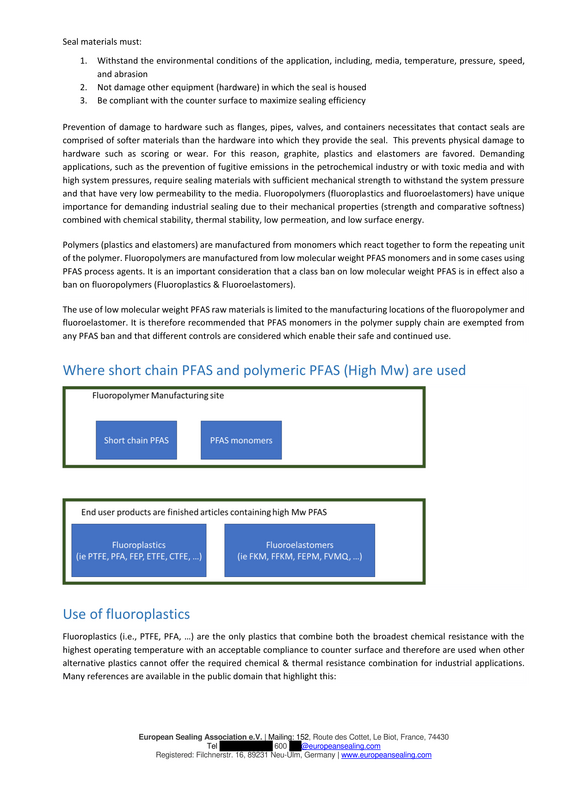
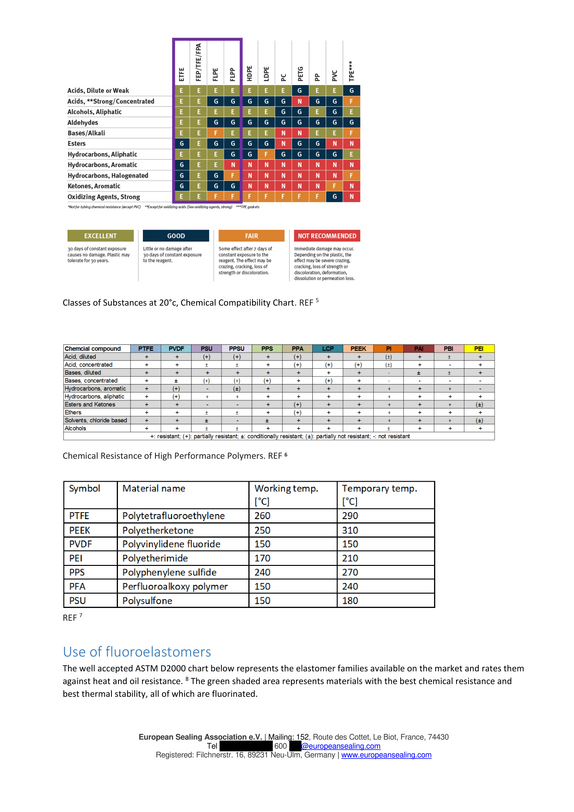
refid# reyRk0BpoQE7gve5MeMvV9GBr13 pages
Comment on Proposed Restriction of PFAS Aug 25, 2023 Japan Valve Manufactures' Association (JVMA) Japan Valve Manufacturers Association (JVMA) appreciates the opportunity to provide comments to the PFAS restriction proposal. 1.
refid# g2byJaKKp6Gzo32qZab7RLDBV13 pages
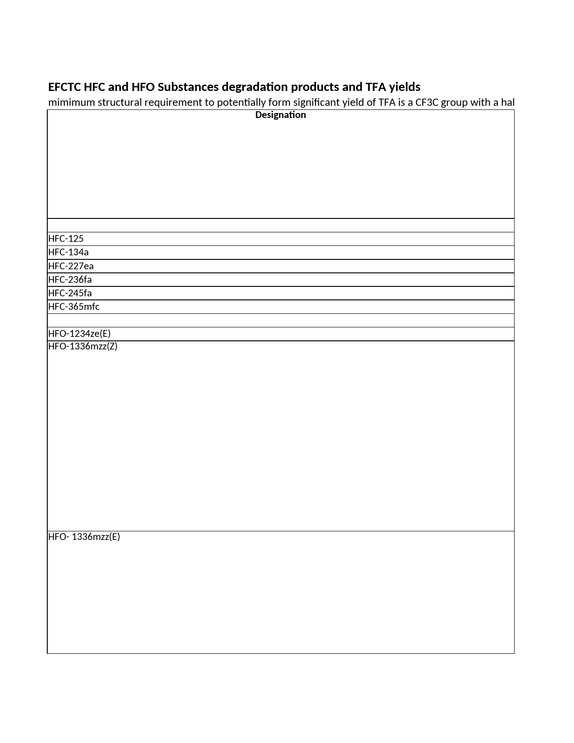
EFCTC HFC and HFO Substances degradation products and TFA yields mimimum structural requirement to potentially form significant yield of TFA is a CF3C group with a halogen such as Designation HFC-125 HFC-134a HFC-227ea HFC-236fa HFC-245fa HFC-365mfc HFO-1234ze(E) HFO-1336mzz(Z) HFO- 1336mzz(E) HCFO-1233zd(E) REFERENCES s 1 2 3 4 5 6 7 8 9 10 p with a halogen such as F or Cl also attached to the C eg CF3CF Complete Name Formula CAS Final Degradation Products number pentafluoroethane 1,1,1,2-tetrafluoroethane 1,1,1,2,3,3,3-heptafluoropropane 1,1,1,3,3,3-hexafluoropropane 1,1,1,3,3-pentafluoropropane 1,1,1,3,3-pentafluorobutane CHF2CF3 CH2FCF3 CF3CHFCF3 CF3CH2CF3 CHF2CH2CF3 CF3CH2CF2CH3 354-33-6 811-97-2 431-89-0 290-39-1 460-73-1 406-58-6 CO2, HF HCOOH, CO2, HF, CF3COOH CO2, HF, CF3COOH CO2,HF, CF3COOH CO2,HF, CF3COOH CO2,HF, CF3COOH Trans-1,3,3,3-tetrafluoroprop-1-ene Cis-1,1,1,4,4,4-hexafluorobut-2-ene Trans- CF3CH=CFH Cis-CF3CH=CHCF3 29118-24- CO2, HCOOH, HF 692-49-9 CO2, HF, insignificant formation of CF3COOH Trans-1,1,1,4,4,4-hexafluorobut-2ene TransCF3CH=CHCF3 66711-86- CO2, HF, insignificant 2 formation of CF3COOH Trans 1-Chloro-3,3,3-trifluoroprop-1- Trans-CHCl=CHCF3 102687- CO2, HF, HCl, zero or ene 65-0 insignificant CF3COOH The TFA yields have been determined using models and/or laboratory experiments.



refid# XOJ8X13VQxa9w1OGN43ZV8Bxd14 pages
CIRCOR ALLWEILER' ALLWEILER GmbH .
refid# KeoEwvQBq512g577Q5adVDzo4 pages
Risk assessment of exposure to PFAS through food and drinking water in the Netherlands RIVM report 2023-0011 Risk assessment of exposure to PFAS through food and drinking water in the Netherlands RIVM report 2023-0011 RIVM report 2023-0011 Colophon RIVM 2023 Parts of this publication may be reproduced, provided acknowledgement is given to the: National Institute for Public Health and the Environment, and the title and year of publication are cited.

refid# wE29yZmoNGDd5Dk3gbavgRxB80 pages