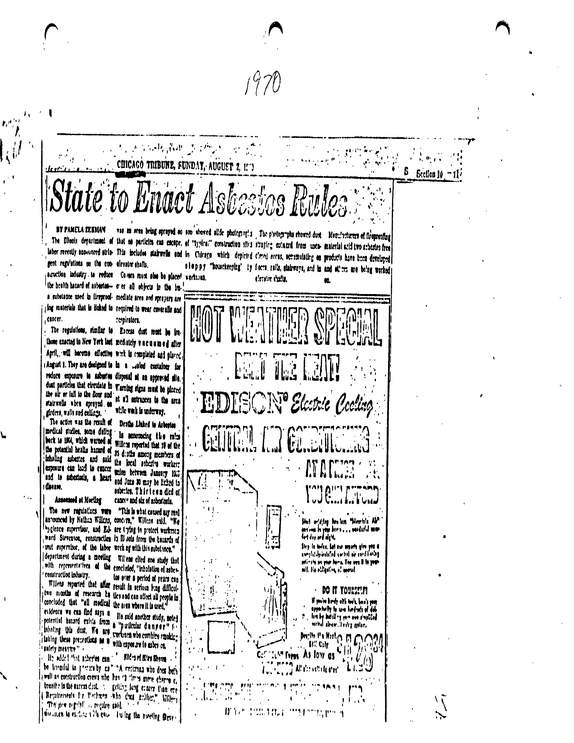
FILE NAME Newspaper & Magazine Articles NMA DATE 1970 Aug 2 DOC NMA170 DOCUMENT DESCRIPTION Chicago Tribune Article - State to Enact Asbestos Rules a 1970 | a oo . peg ey nde, taal!
refid# kDY8bozZd9mx3bXX4pgRGynOB2 pages
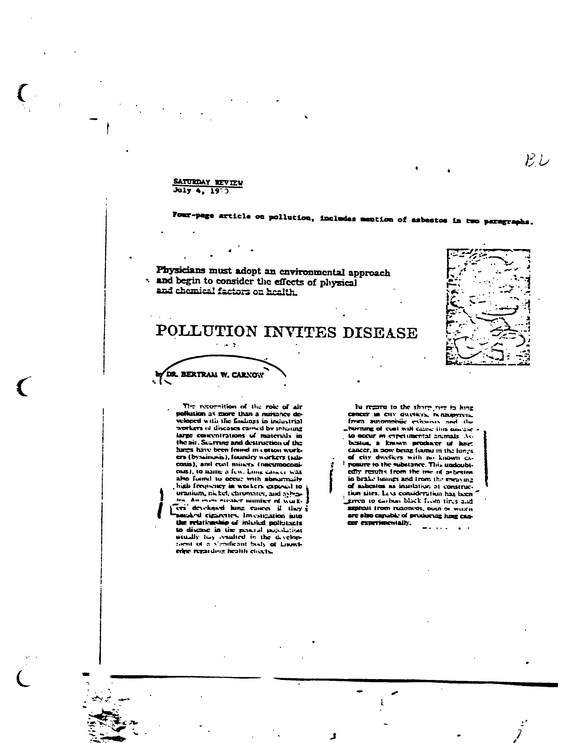
FILE NAME Newspaper & Magazine Articles NMA DATE 1970 July 4 DOC NMA165 DOCUMENT DESCRIPTION Saturday Review - Pollution Invites Disease SATURDAY REVIEW July 4 1970 Four article on pollution includes ention of asbestos in rwo paragraphs Physicians must adopt an environmental approach and begin to consider the effects of physical and chemical factors on health POLLUTION INVITES DISEASE ~ DR BERTRAM W.
refid# JJjg428Kjyk4z94pdnzBXNXmv2 pages
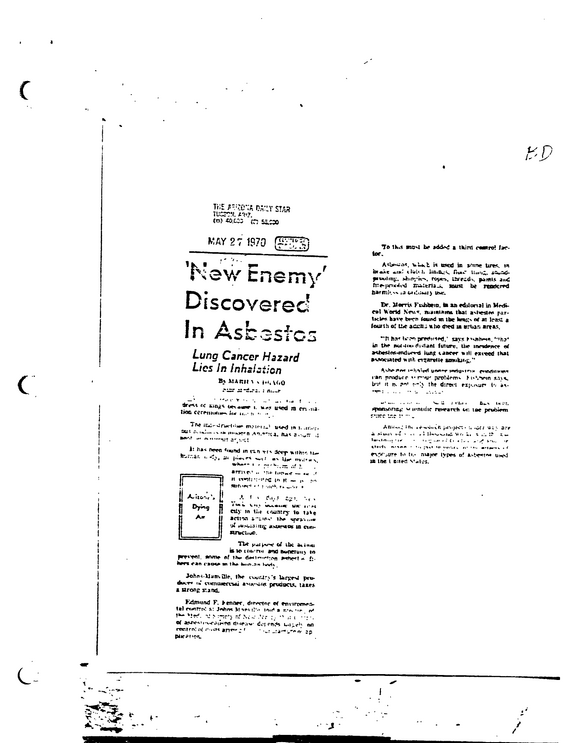
FILE NAME Newspaper & Magazine Articles NMA DATE 1970 May 27 DOC NMA150 DOCUMENT DESCRIPTION Arizona Daily Star Newspaper Article - New Enemy Discovered in Asbestos - THE PERZONA DAILY STAR TUCSON ARIZ m 40,000 55,000 27 MAY 1970 (EET) NewEnemy Discovered In Asbestos Lung Cancer Hazard Lies In Inhalation By MARIANAWAGO MARIANAWAGO MARIANAWAGO MARIANAWAGO Per sheers. t Mer _ 7 fer Kore a 7 because because dress of Kings tion ceremote for icon was ' we 1..6 used in ... eruna eruna The ihe Suchbe material used in anere PRES tales ON 150 MODO Anak has Sour BAT wt mrs se ect It has WILBT been found in tan ets deep within te Ey a piecepiseces wil the av^ The where it. arrived ..
refid# zokR62rr2abqDNMXwzxmgGZva2 pages
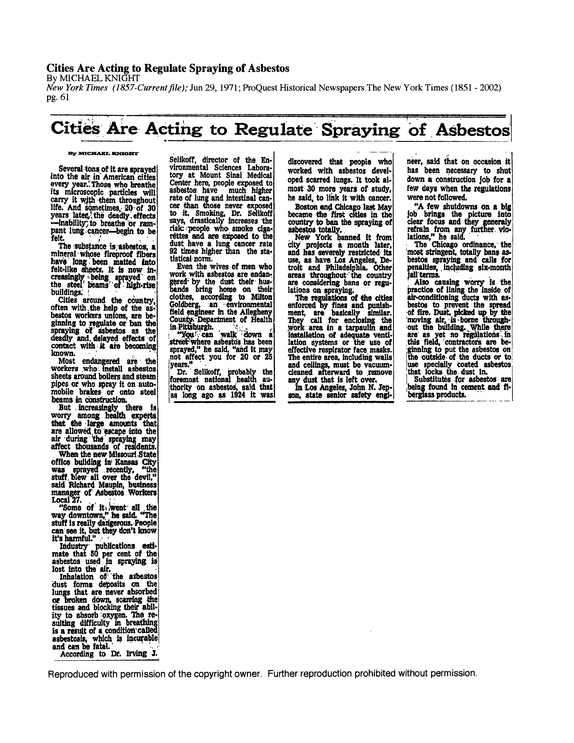
FILE NAME Newspaper & Magazine Articles NMA DATE 1971 June 29 DOC NMA054 DOCUMENT DESCRIPTION NYT - Cities Are Acting to Regulate Spraying of Asbestos Cities Are Acting to Regulate Spraying of Asbestos By MICHAEL KNIGHT New York Times Current file Jun 29 1971 ProQuest Historical Newspapers The New York Times 1851 - 2002 Pg 61 Cities Are Acting to Regulate Spraying of Asbestos BY MICHAEL KNIGHT Several tons of it are sprayed American sprayed into the air in year Those every its microscopic who breathe microscopic particles throughout carry it with them throughout life And sometimes 20 30 years later the deadly effects -Inabilittyo breathe or ram- pfaenltt lung cancer : to be ' The substance is asbestos a mineral whose fireproof fibers have long been matted into like .
refid# ba7ORvwoLJ5XKpvz0GLewmwk2 pages
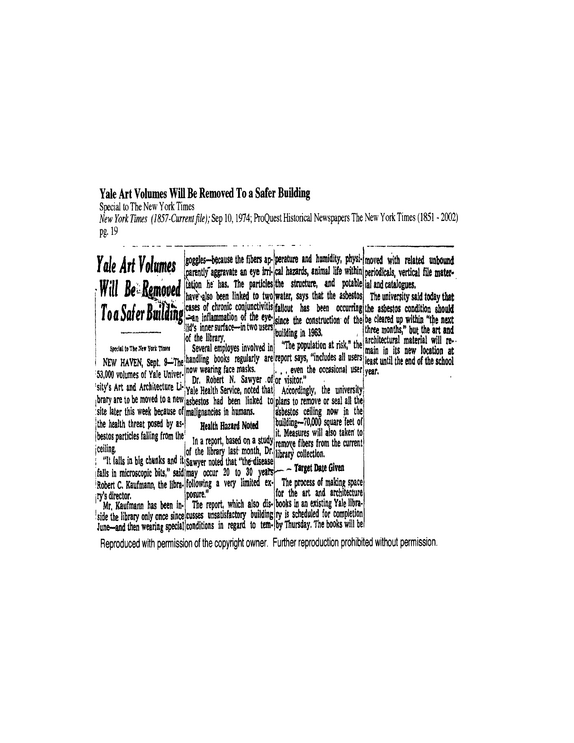
FILE NAME Newspaper & Magazine Articles NMA DATE 1974 Sept 10 DOC NMA086 DOCUMENT DESCRIPTION NYT - Yale Art Volumes Will Be Removed To a Safer Building Yale Art Volumes Will Be Removed To a Safer Building Special to The New York Times New York Times Currentfile Sep 10 1974 ProQuest Historical Newspapers The New York Times 1851 - 2002 Pg 19 Yale ArtVolumes | Will Be Removed To SaferBuilding 1 Special to The New York Times | NEW HAVEN Sept.

refid# ymKKZJrpLoZ8y233o4yGOo7232 pages
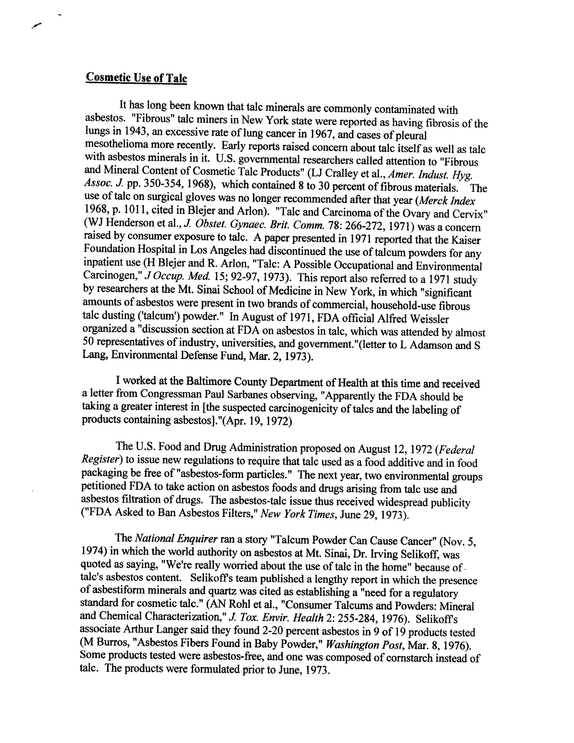
FILE NAME Talc TALC DATE 0000 DOC TALC059 DOCUMENT DESCRIPTION Unpublished Report - FDA & Talc Cosmetic Use of Talc It has long been known that talc minerals are commonly contaminated with asbestos Fibrous talc miners in New York state were reported as having fibrosis of the lungs in 1943 an excessive rate of lung cancer in 1967 and cases of pleural mesothelioma more recently Early reports raised concern about talc itself as well as talc with asbestos minerals in it U.S. governmental researchers called attention to Fibrous and Mineral Content of Cosmetic Talc Products LJ Cralley et al Amer Indust Hyg Assoc J. pp 350-354 1968 which contained 8 to 30 percent of fibrous materials The use of talc on surgical gloves was no longer recommended after that year Merck Index 1968 p 1011 cited in Blejer and Arlon Talc and Carcinoma of the Ovary and Cervix WJ Henderson et al J.


refid# GqmX0zKJwbzEVjn2RYE5oMEm3 pages
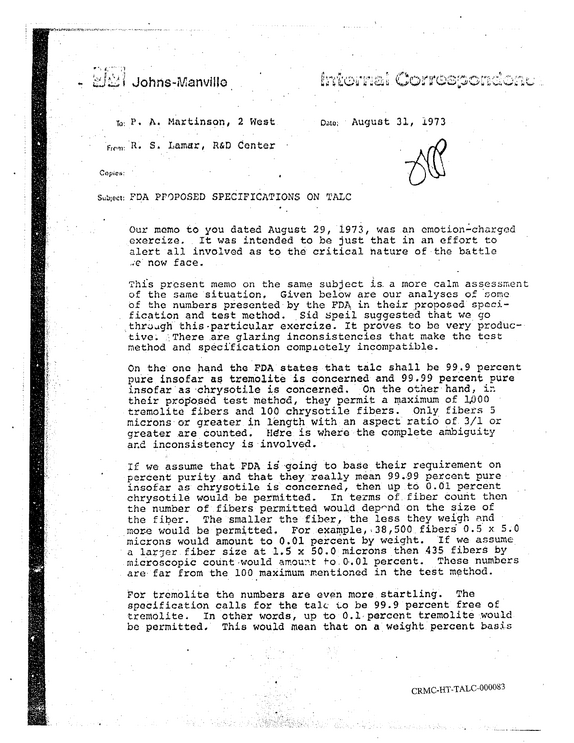
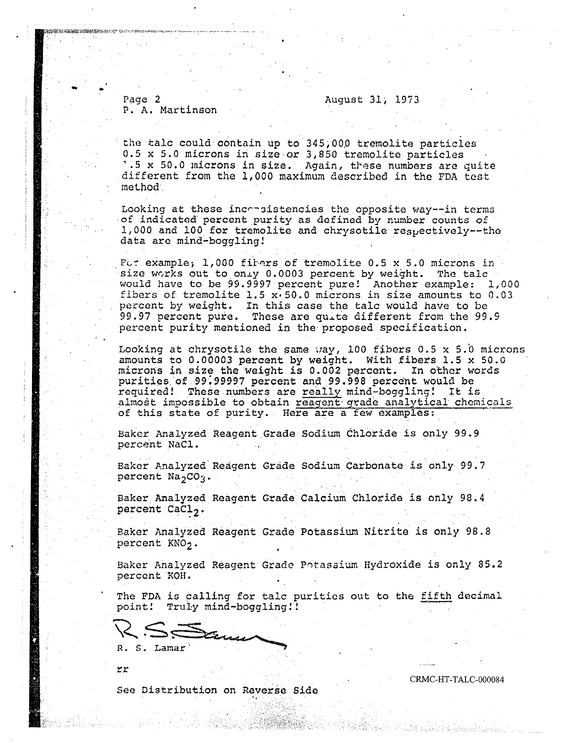
FILE NAME Talc TALC DATE 1973 Aug 31 DOC TALC455 DOCUMENT DESCRIPTION Memo RE Proposed Specifications on Talc 22) Manville Internal Correspondenci Internal Internal Internal Internal | Corespondenci Correspondenci Corespondenci To P.

refid# e1m6mrn9k5DENbLGmaDbE5rqM4 pages
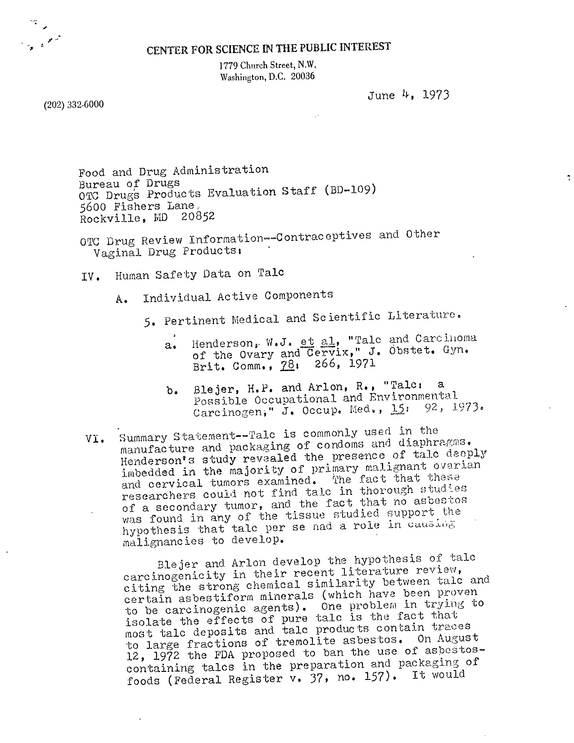
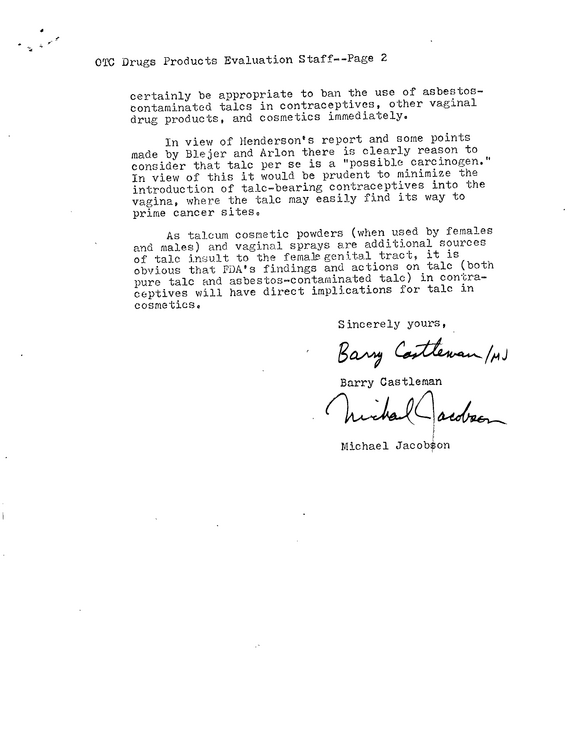
FILE NAME Talc TALC DATE 1973 June 4 DOC TALC074 DOCUMENT DESCRIPTION Letter to the FDA from Barry Castleman 202 332-6000 CENTER FOR SCIENCE IN THE PUBLIC INTEREST 1779 Church Street N.W.

refid# ZJp6ZO0qOVExYyQNQmDkV2Q483 pages
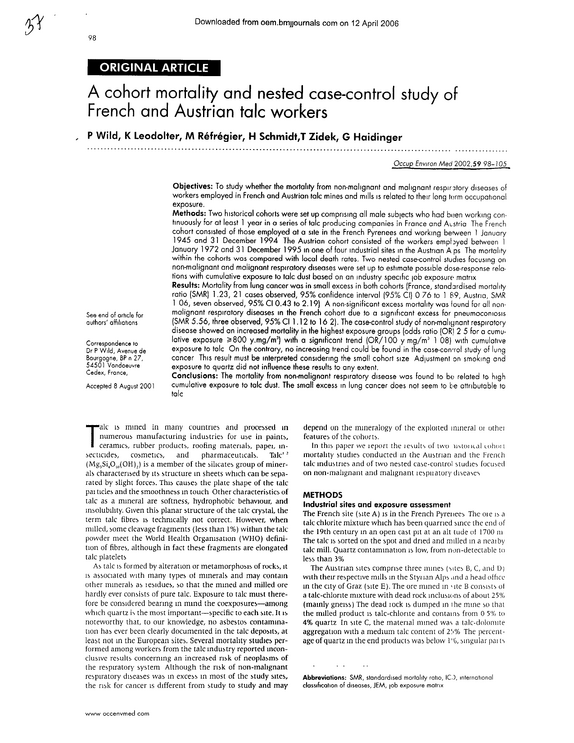
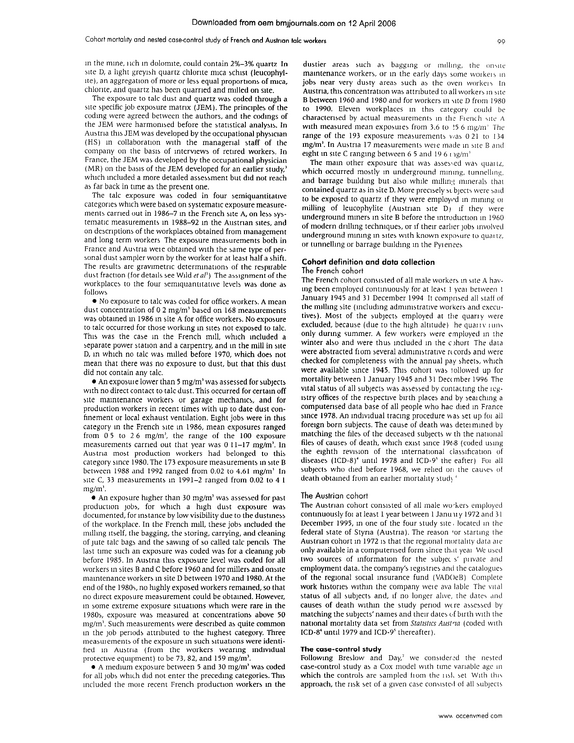
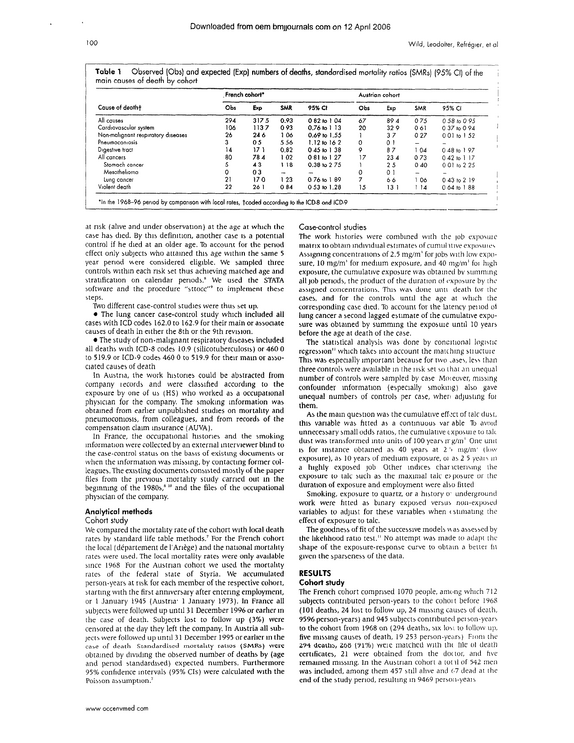
FILE NAME Talc TALC DATE 2002 DOC TALC176 DOCUMENT DESCRIPTION Journal Article - A Cohort Mortality and Nested Contol Study of French and Austrian Talc Workers Downloaded from oem.bmjjournals com on 12 April 2006 98 ORIGINAL ARTICLE A cohort mortality and nested control study of French and Austrian talc workers P Wild K Leodolter M R^'fr^'gieHr Schmidt Zidek G Haidinger See end of article for authors affiliations Correspondence to Dr P Wild Avenue de Bourgogne BP n 27 54501 Vandoeuvre Cedex France Accepted 8 August 2001 Occup Environ Med 2002,59 98 105 Objectives To study whether the mortality from malignant and malignant respiratory diseases of workers employed in French and Austrian talc mines and mills is related to their long term occupational exposure Methods Two historical cohorts were set up comprising all male subjects who had been working continuously for at least 1 year in a series of talc producing companies in France and Austria The French cohort consisted of those employed at a site in the French Pyrenees and working between 1 January 1945 and 31 December 1994 The Austrian cohort consisted of the workers employed between 1 January 1972 and 31 December 1995 in one of four industrial sites in the Austrian A ps The mortality within the cohorts was compared with local death rates Two nested control studies focusing on malignant and malignant respiratory diseases were set up to estimate possible response relations with cumulative exposure to talc dust based on an industry specific job exposure matrix Results Mortality from lung cancer was in small excess in both cohorts France standardised mortality ratio SMR 1.23 21 cases observed 95 confidence interval 95 CI 0 76 to 189 189 Austria SMR 1 06 seven observed 95 CI 0.43 to 2.19 A significant excess mortality was found for all nonmalignant respiratory diseases in the French cohort due to a significant excess for pneumoconiosis SMR 5.56 three observed 95 CI 1.12 to 16 2 The control study of malignant respiratory disease showed an increased mortality in the highest exposure groups odds ratio OR 25 25 for a cumulative exposure 80y0.mg/mwith a significant trend 100 y mg 108 108 with cumulative exposure to talc On the contrary no increasing trend could be found in the control study of lung cancer This result must be interpreted considering the small cohort size Adjustment on smoking and exposure to quartz did not influence these results to any extent Conclusions The mortality from malignant respiratory disease was found to be related to high cumulative exposure to talc dust The small excess in lung cancer does not seem to be attributable to talc is mined in many countries and processed in Tnumerous manufacturing industries for use in paints ceramics rubber products roofing materials papei in- secticides cosmetics and pharmaceuticals Talc MgSi is a member of the silicates group of miner- als characterised by its structure in sheets which can be sepa- rated by slight forces This causes the plate shape of the talc particles and the smoothness in touch Other characteristics of talc as a mineral are softness hydrophobic behaviour and insolubility Given this planar structure of the talc crystal the term talc fibres is technically not correct However when milled some cleavage fragments less than % within the talc powder meet the World Health Organisation WHO definition of fibres although in fact these fragments are elongated talc platelets As talc is formed by alteration or metamorphosis of rocks it is associated with many types of minerals and may contain other minerals as residues so that the mined and milled ore hardly ever consists of pure talc Exposure to talc must therefore be considered bearing in mind the coexposures which quartz is the most important to each site It noteworthy that to our knowledge no asbestos contamina- tion has ever been clearly documented in the talc deposits at least not in the European sites Several mortality studies performed among workers from the talc industry reported inconclusive results concerning an increased risk of neoplasms of the respiratory system Although the risk of malignant respiratory diseases was in excess in most of the study sites the risk for cancer is different from study to study and may depend on the mineralogy of the exploited inineral or other features of the cohorts In this paper we report the results of two ustorical cohort mortality studies conducted in the Austrian and the French talc industries and of two nested control studies focused on malignant and malignant respiratory diseases METHODS Industrial sites and exposure assessment The French site site A is in the French Pyrenees The ore is a talc chlorite mixture which has been quarried since the end of the 19th century in an open cast pit at an alt tude of 1700 m The talc is sorted on the spot and dried and milled in a nearby talc mill Quartz contamination is low from detectable to less than % The Austrian sites comprise three mines sites B C and D with their respective mills in the Styrian Alps and a head office in the city of Graz site E The ore mined in ite B consists of a chlorite mixture with dead rock inclusions of about 25 mainly gneiss The dead 1ock is dumped in the mine so that the milled product is chlorite and contains from 0 % to % quartz In site C the material mined was a dolomite aggregation with a medium talc content of 25 The percent- age of quartz in the end products was below % singular parts Abbreviations SMR standardised mortality ratio IC international classification of diseases JEM job exposure matrix www.occenvmed www.occenvmed com Downloaded from oem bmjjournals.com on 12 April 2006 Cohort mortality and nested control study of French and Austrian talc workers 99 in the mine ich in dolomite could contain -3 quartz In site D a light greyish quartz chlorite mica schist leucophylite an aggregation of more or less equal proportions of mica chlorite and quartz has been quarried and milled on site The exposure to talc dust and quartz was coded through a site specific job exposure matrix JEM The principles of the coding were agreed between the authors and the codings of the JEM were harmonised before the statistical analysis In Austria this JEM was developed by the occupational physician HS in collaboration with the managerial staff of the company on the basis of interviews of retired workers In France the JEM was developed by the occupational physician MR on the basis of the JEM developed for an earlier study which included a more detailed assessment but did not reach as far back in time as the present one The talc exposure was coded in four semiquantitative categories which were based on systematic exposure measurements carried out in 1986-7 in the French site A on less systematic measurements in 1988-92 in the Austrian sites and on descriptions of the workplaces obtained from management and long term workers The exposure measurements both in France and Austria were obtained with the same type of per- sonal dust sampler worn by the worker for at least half a shift The results are gravimetric determinations of the respirable dust fraction for details see Wild et al The assignment of the workplaces to the four semiquantitative levels was done as follows @ No exposure to talc was coded for office workers A mean dust concentration of 02 02 mg based on 168 measurements was obtained in 1986 in site A for office workers No exposure to talc occurred for those working in sites not exposed to talc This was the case in the French mill which included a separate power station and a carpentry and in the mill in site D in which no talc was milled before 1970 which does not mean that there was no exposure to dust but that this dust did not contain any talc @ An exposure lower than 5 mg was assessed for subjects with no direct contact to talc dust This occurred for certain off site maintenance workers or garage mechanics and for production workers in recent times with up to date dust confinement or local exhaust ventilation Eight jobs were in this category in the French site in 1986 mean exposures ranged from 05 to 26 mg the range of the 100 exposure measurements carried out that year was 0 11-17 mg In Austria most production workers had belonged to this category since 1980.
refid# pzRXBde4B2Eg4L3YQgQR798B9 pages
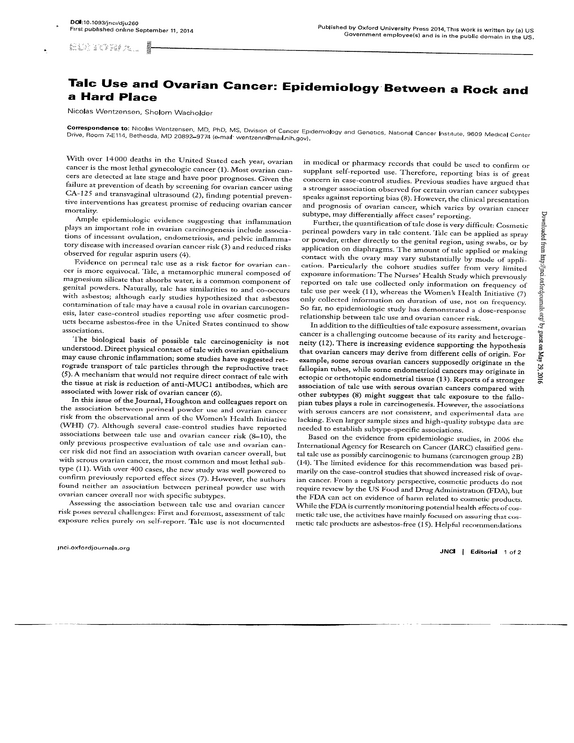
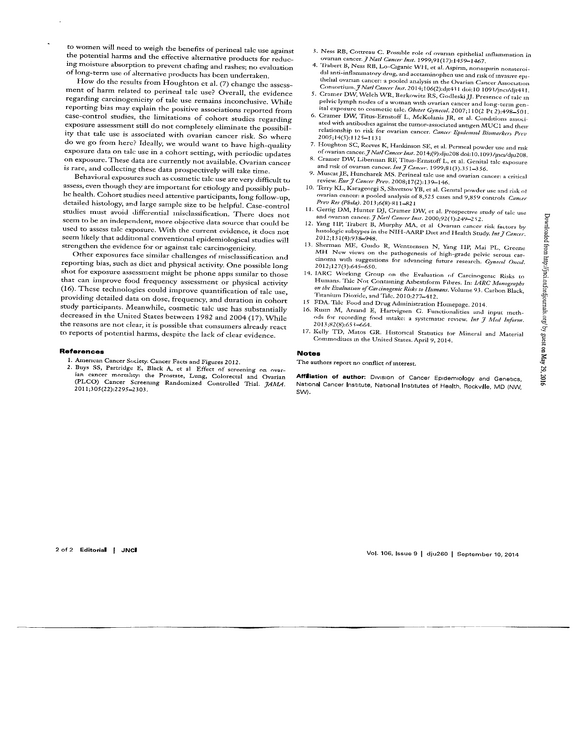
FILE NAME Talc TALC DATE 2014 DOC TALC134 DOCUMENT DESCRIPTION Journal Article - Talc Use and Ovarian Cancer- Epidemiology Between a Rock and a Hard Place DOI dju260 First published online September 11 2014 xs Published by Oxford University Press 2014 This work is written by a US Government employee and is in the public domain in the US Talc Use and Ovarian Cancer Epidemiology Between a Rock and a Hard Place Nicolas Wentzensen Sholom Wacholder Correspondence to Nicolas Wentzensen MD PhD MS Division of Cancer Epidemiology and Genetics National Cancer Drive Room E114 Bethesda MD 20892-9774 mail Institute 9609 Medical Center wentzenn@mail.nih.gov With over 14000 deaths in the United Stated each year ovarian cancer is the most lethal gynecologic cancer 1 Most ovarian can- cers are detected at late stage and have poor prognoses Given the failure at prevention of death by screening for ovarian cancer using CA and transvaginal ultrasound 2 finding potential preventive interventions has greatest promise of reducing ovarian cancer mortality Ample epidemiologic evidence suggesting that inflammation plays an important role in ovarian carcinogenesis include associa- Downlade tions of incessant ovulation endometriosis and pelvic inflamma- tory disease with increased ovarian cancer risk 3 and reduced risks from observed for regular aspirin users 4 Evidence on perineal talc use as a risk factor for ovarian can- cer is more equivocal Talc a metamorphic mineral composed of magnesium silicate that absorbs water is a common component of genital powders Naturally talc has similarities to and occurs with asbestos although early studies hypothesized that asbestos contamination of talc may have a causal role in ovarian carcinogen- htp:/jnci.oxfrdualsg/ esis later control studies reporting use after cosmetic prod- in medical or pharmacy records that could be used to confirm or supplant reported use Therefore reporting bias is of great concern in control studies Previous studies have argued that a stronger association observed for certain ovarian cancer subtypes speaks against reporting bias 8 However the clinical presentation and prognosis of ovarian cancer which varies by ovarian cancer subtype may differentially affect cases reporting Further the quantification of tale dose is very difficult Cosmetic perineal powders vary in talc content Talc can be applied as spray or powder either directly to the genital region using swabs or by application on diaphragms The amount of talc applied or making contact with the ovary may vary substantially by mode of application Particularly the cohort studies suffer from very limited exposure information The Nurses Health Study which previously reported on talc use collected only information on frequency of talc use per week 11 whereas the Women's Health Initiative 7 only collected information on duration of use not on frequency So far no epidemiologic study has demonstrated a response relationship between talc use and ovarian cancer risk ucts became asbestos in the United States continued to show associations In addition to the difficulties of talc exposure assessment ovarian by guest The biological basis of possible talc cancer is a challenging outcome because of its rarity and heteroge- carcinogenicity is not neity 12 There is increasing evidence supporting the hypothesis on understood Direct physical contact of tale with ovarian epithelium that ovarian cancers may derive from different cells of origin For May may cause chronic inflammation some studies have suggested ret- example some serous ovarian cancers supposedly originate in the rograde transport of talc particles through the reproductive tract fallopian tubes while some endometrioid 29 5 A mechanism that would not require direct contact of talc with cancers may originate in 2016 the tissue at risk is reduction of ectopic or orthotopic endometrial tissue 13 Reports of a stronger MUC1 antibodies which are association of talc use with serous ovarian cancers compared with associated with lower risk of ovarian cancer 6 other subtypes 8 might suggest that talc to the fallo- In this issue of the Journal Houghton and colleagues report on exposure pian tubes plays a role in carcinogenesis However the associations the association between perineal powder use and ovarian cancer with serous cancers are not consistent and experimental data are risk from the observational arm of the Women's Health Initiative lacking Even larger sample sizes and quality subtype data are WHI 7 Although several control studies have reported needed to establish specific associations associations between talc use and ovarian cancer risk 8-10 the Based on the evidence from epidemiologic studies in 2006 the only previous prospective evaluation of talc use and ovarian can- International Agency for Research on Cancer IARC classified cer risk did not find an association with ovarian cancer overall but geni- tal talc use as possibly carcinogenic to humans carcinogen group 2B with serous ovarian cancer the most common and most lethal sub- 14 The limited evidence for this recommendation based type 11 With over 400 cases the new study was well powered to was pri- marily on the control studies that showed increased risk of ovar- confirm previously reported effect sizes 7 However the authors ian cancer From a regulatory perspective cosmetic products do not found neither an association between perineal powder use with require review by the US Food and Drug Administration FDA but ovarian cancer overall nor with specific subtypes the FDA can act on evidence of harm related to cosmetic products Assessing the association between talc use and ovarian cancer While the FDA is currently monitoring potential health effects of cos- risk poses several challenges First and foremost assessment of talc metic talc use the activities have mainly focused on assuring that cos- exposure relies purely on report Talc use is not documented metic tale products are asbestos 15 Helpful recommendations inci.oxfordjournals.org JNCI [ Editorial 1 of2 to women will need to weigh the benefits of perineal talc use against the potential harms and the effective alternative products for reducing moisture absorption to prevent chafing and rashes no evaluation of term use of alternative products has been undertaken How do the results from Houghton et al 7 change the assessment of harm related to perineal talc use Overall the evidence regarding carcinogenicity of talc use remains inconclusive While reporting bias may explain the positive associations reported from control studies the limitations of cohort studies regarding possibil- exposure assessment still do not completely eliminate the ity that talc use is associated with ovarian cancer risk So where do we go from here Ideally we would want to have quality exposure data on talc use in a cohort setting with periodic updates on exposure These data are currently not available Ovarian cancer is rare and collecting these data prospectively will take time Behavioral exposures such as cosmetic talc use are very difficult to assess even though they are important for etiology and possibly public health Cohort studies need attentive participants long follow detailed histology and large sample size to be helpful control studies must avoid differential misclassification There does not seem to be an independent more objective data source that could be used to assess talc exposure With the current evidence it does not seem likely that additional conventional epidemiological studies will strengthen the evidence for or against talc carcinogenicity Other exposures face similar challenges of misclassification and reporting bias such as diet and physical activity One possible long shot for exposure assessment might be phone apps similar to those that can improve food frequency assessment or physical activity 16 These technologies could improve quantification of talc use providing detailed data on dose frequency and duration in cohort study participants Meanwhile cosmetic talc use has substantially decreased in the United States between 1982 and 2004 17 While the reasons are not clear it is possible that consumers already react to reports of potential harms despite the lack of clear evidence References 1.
refid# KJKrYJOyv6vpJpbYMzdVxqR203 pages
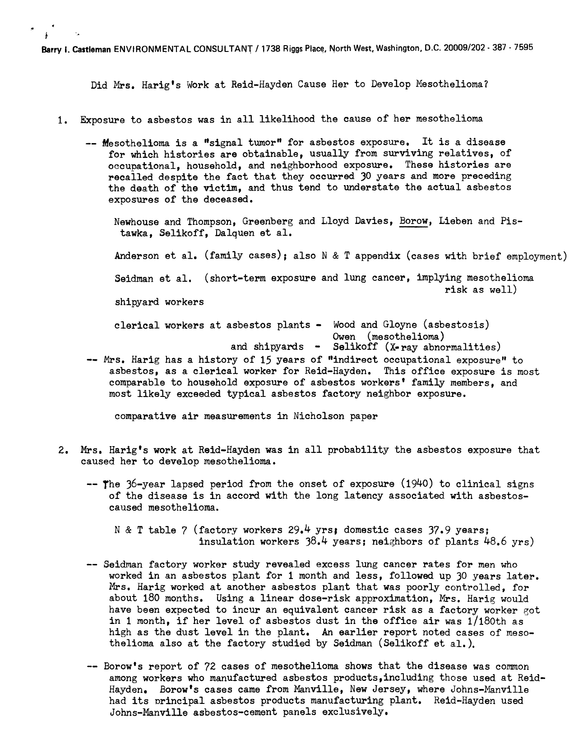
FILE NAME: Asbestos Cement Pipe and Sheet (ACPS) DATE: 0000 DOC#: ACPS085 DOCUMENT DESCRIPTION: BC Notes Barry I.

refid# LKD8OeqvLzznVVYq2v7mRXNng2 pages
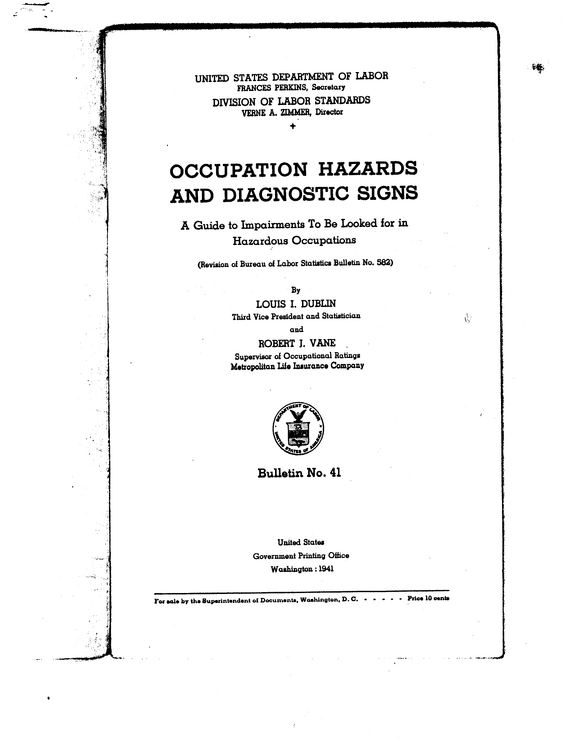
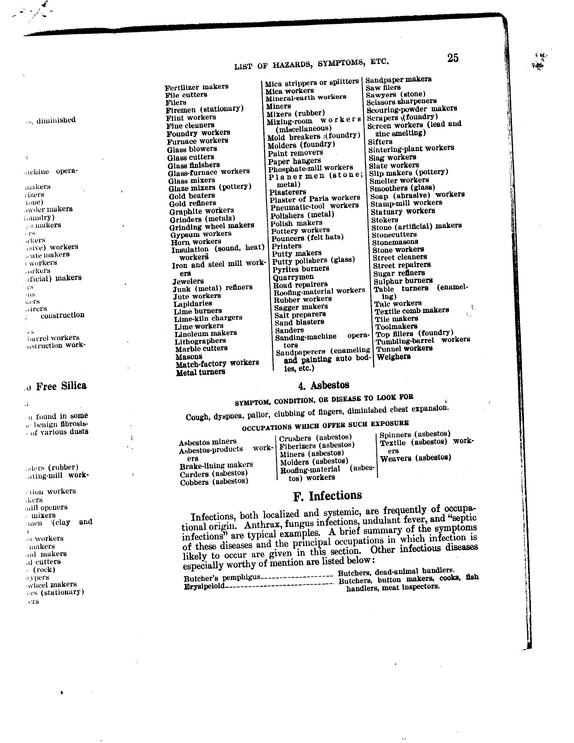
FILE NAME Brakes BRK DATE 1941 DOC BRK009 DOCUMENT DESCRIPTION US Dept of Labor - Occupation Hazards and Diagnostic Signs - Asbestos UNITED STATES DEPARTMENT OF LABOR FRANCES PERKINS Secretary DIVISION OF LABOR STANDARDS VERNE A.
refid# k6wKVZLpkrZXxowqv1yBJB5Nn3 pages
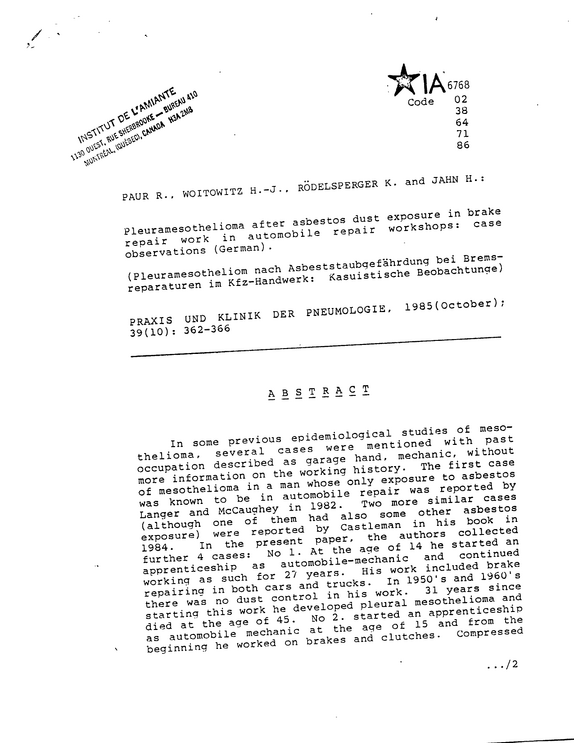
FILE NAME Brakes BRK DATE 1985 Oct DOC BRK092 DOCUMENT DESCRIPTION English Abstract - Pleuramesothelioma After Asbestos Dust Exposure in Brake Repair Work Case Studies - Original Article in German L'AMIANTE L'AMIANTE 410 MUNTR^ AL L'AMIANTE INSTITUT DE SHERBROOKE H3A INSTITUT INSTITUT SHERBROOKE SHERBROOKE CANADA SHERBROOKE INSTITUT OUEST 1130 MUNTR^AL : KIA KIA KIA6768 Code 02 38 64 71 86 PAUR R.
refid# jyEgQO0dm9RdBJo0Gp262593p2 pages
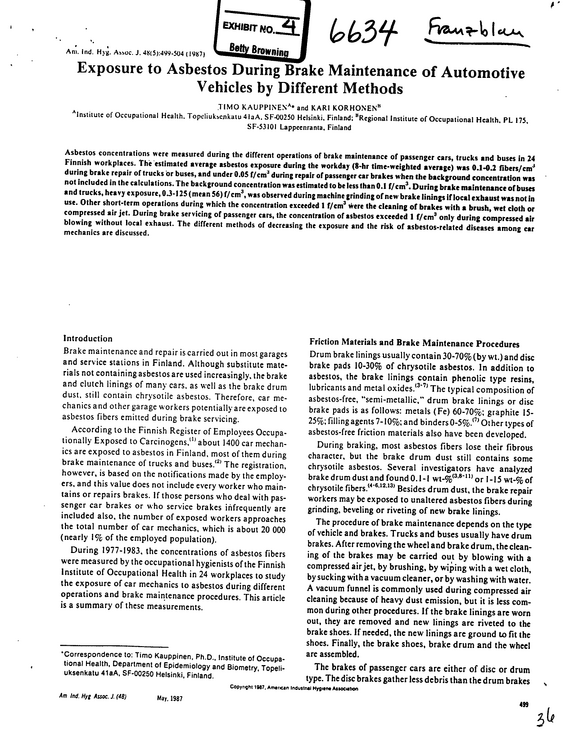
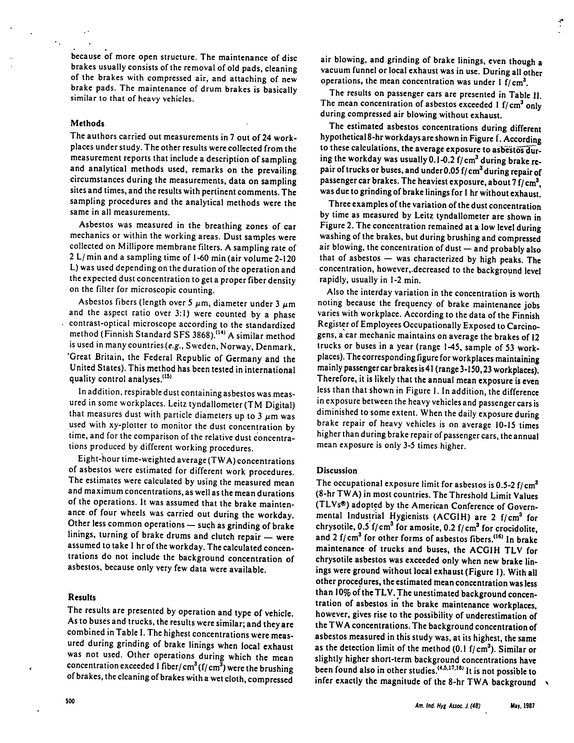
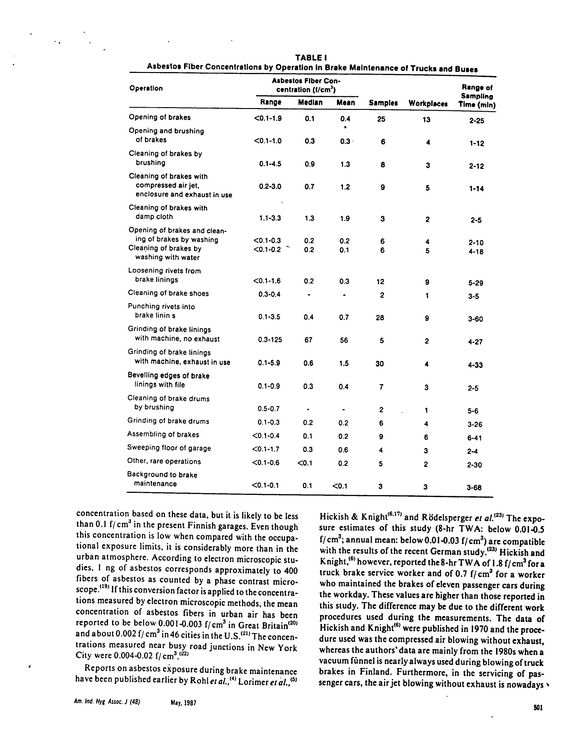
FILE NAME Brakes BRK DATE 1987 DOC BRK101 DOCUMENT DESCRIPTION Journal Article - Exposure to Asbestos During Brake Maintenance of Automotive Vehicles by Different Methods 4s Ind Am Ind Hyg Assoc J. 499-504 1987 EXHIBIT Betty Browning Browning 6634 Franzblan Exposure to Asbestos During Brake Maintenance of Automotive Vehicles by Different Methods TIMO KAUPPINEN and KARI KORHONEN Institute of Occupational Health Topeliuksenkatu 41aA 00250 Helsinki Finland Regional Institute of Occupational Health PL 175 53101 Lappeenranta Finland Asbestos concentrations were measured during the different operations of brake maintenance of passenger cars trucks and buses in 24 Finnish workplaces The estimated average asbestos exposure during the workday hr weighted average was 0.1-0.2 fibers during brake repair of trucks or buses and under 0.05 cmduring repair of passenger car brakes when the background concentration was not included in the calculations The background concentration was estimated to be less than 0.1 cmDuring brake maintenance of buses and trucks heavy exposure 0.3-125 mean 56 / cmwas observed during machine grinding of new brake linings if local exhaust was not in use Other short operations during which the concentration exceeded 1 cmwere the cleaning of brakes with a brush wet cloth or compressed air jet During brake servicing of passenger cars the concentration of asbestos exceeded 1 cmonly during compressed air blowing without local exhaust The different methods of decreasing the exposure and the risk of asbestos diseases mechanics are discussed among car Introduction Brake maintenance and repair is carried out in most garages and service stations in Finland Although substitute mate- rials not containing asbestos are used increasingly the brake and clutch linings of many cars as well as the brake drum dust still contain chrysotile asbestos Therefore car mechanics and other garage workers potentially are exposed to asbestos fibers emitted during brake servicing According to the Finnish Register of Employees Occupationally Exposed to Carcinogens about 1400 car mechan- ics are exposed to asbestos in Finland most of them during brake maintenance of trucks and buses The registration however is based on the notifications made by the employ- ers and this value does not include every worker who main- tains or repairs brakes If those persons who deal with passenger car brakes or who service brakes infrequently are included also the number of exposed workers approaches the total number of car mechanics which is about 20 000 nearly % of the employed population During 1977-1983 the concentrations of asbestos fibers were measured by the occupational hygienists of the Finnish Institute of Occupational Health in 24 workplaces to study the exposure of car mechanics to asbestos during different operations and brake maintenance procedures This article is a summary of these measurements Friction Materials and Brake Maintenance Procedures Drum brake linings usually contain 30-70 by wt and disc brake pads 10-30 of chrysotile asbestos In addition to asbestos the brake linings contain phenolic type resins lubricants and metal oxides The typical composition of asbestos metallic drum brake linings or disc brake pads is as follows metals Fe 60-70 graphite 15- 25 filling agents 7-10 and binders 0-5 Other types of asbestos friction materials also have been developed During braking most asbestos fibers lose their fibrous character but the brake drum dust still contains some chrysotile asbestos Several investigators have analyzed brake drum dust and found 0.1-1 3,8-11 or 1-15 wt- of chrysotile 4-6,12,13 Besides drum dust the brake repair workers may be exposed to unaltered asbestos fibers during grinding beveling or riveting of new brake linings The procedure of brake maintenance depends on the type of vehicle and brakes Trucks and buses usually have drum brakes After removing the wheel and brake drum the cleaning of the brakes may be carried out by blowing with a compressed airjet by brushing by wiping with a wet cloth by sucking with a vacuum cleaner or by washing with water A vacuum funnel is commonly used during compressed air cleaning because of heavy dust emission but it is less com- mon during other procedures If the brake linings are worn out they are removed and new linings are riveted to the brake shoes If needed the new linings are ground to fit the shoes Finally the brake shoes brake drum and the wheel Correspondence to Timo Kauppinen Ph.D.
refid# oeX6GMdnjXp1Zoo56vXZvvZoR5 pages
FILE NAME Brakes BRK DATE 2004 DOC BRK140 DOCUMENT DESCRIPTION Journal Article - Evaluation of the Size and Type of Free Particulates Collected from Unused Containing Brake Components as Related to Potential for Respirability -Journal of Occupational Health & Safety - American Journal of Industrial Medicine AMERICAN JOURNAL OF INDUSTRIAL MEDICINE 545-553 2004 Evaluation of the Size and Type of Free Particulates Collected From Unused Containing Brake Components as Related to Potential for Respirability Mark A.L.
refid# 2jZNbbJz92EZ30noJMGgLqe3b10 pages