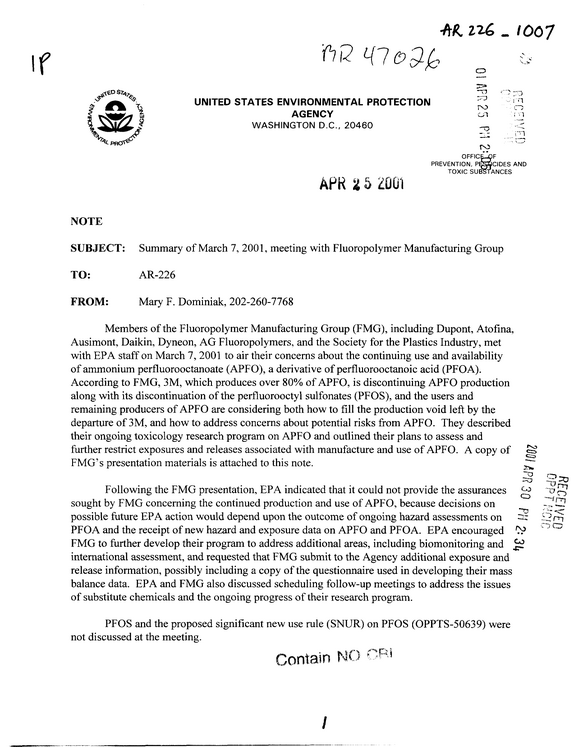
AKlK> _ I07 'fi\2 m & d - k o UNITED STATES ENVIRONMENTAL PROTECTION WASHINGATGOENNDC.YC., 20460 APR %5 2 ro OFFIC " F PREVENTION, P CIDES AND TOXIC SU \NCES NOTE SUBJECT: Summary of March 7, 2001, meeting with Fluoropolymer Manufacturing Group TO: AR-226 FROM: Mary F.
refid# Gzz7v2EJ0GL1322bq938m9rZ71 page
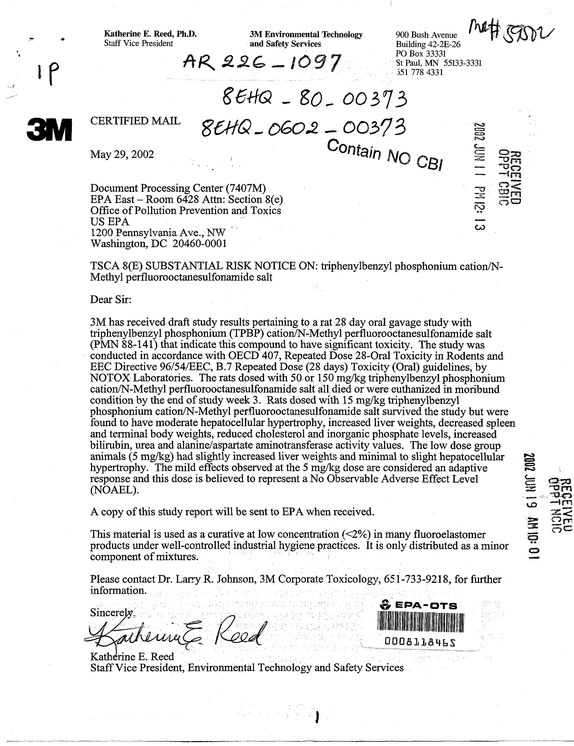
Katherine E.
refid# ykdZdEByjoEmbDBmdwVRkZ59n1 page
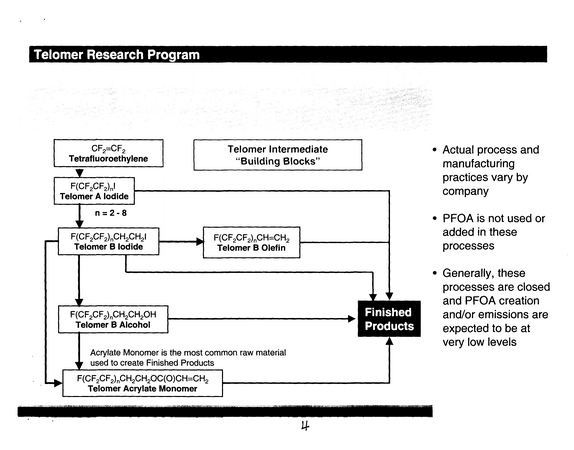
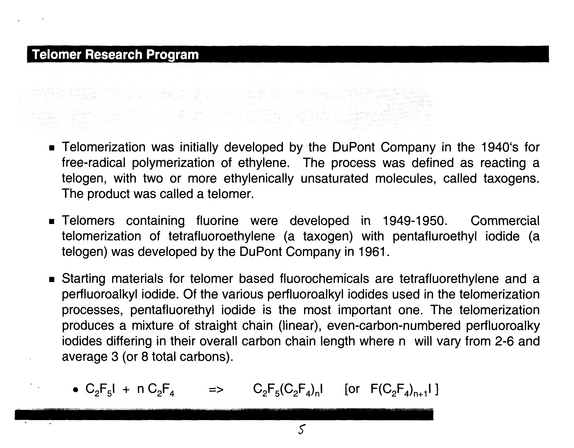
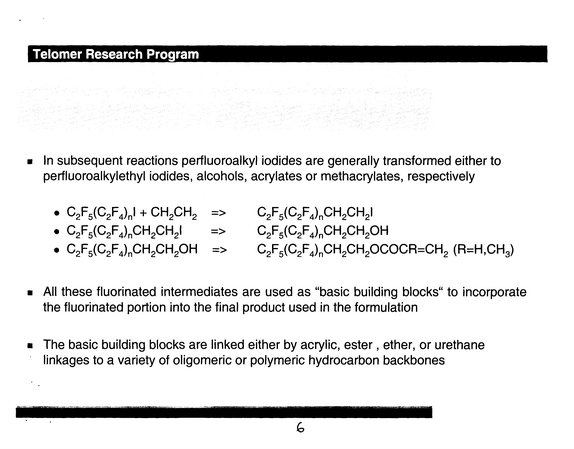
RECEIVED OPPT NCIC 2003 APR - 9 PH 2= 2 5 T R P Telomer Research Program 31 March 2003 Telomer Process Diagram for US EPA - OPPT AR6- lAG ASAHI GLASS COMPANY Clariant D AIK IN Contains no TSCA CBI Telomer Research Program Telomer Intermediate "Building Blocks" F(CFpCFP)nCH=CHp Telomer B Olefin __________________ F(CF2CF2)nCH2CH2OH Telomer B Alcohol Acrylate Monomer is the most common raw material used to create Finished Products F(CF2CF2)nCH2CH20C (0)C H =C H 2 Telomer Acrylate Monomer Vr V Finished Products a Actual process and manufacturing practices vary by company PFOA is not used or added in these processes Generally, these processes are closed and PFOA creation and/or emissions are expected to be at very low levels Telomer Research Program Telomerization was initially developed by the DuPont Company in the 1940`s for free-radical polymerization of ethylene.
refid# 7MqMYvzzJL27znRyemqjyG2qa6 pages
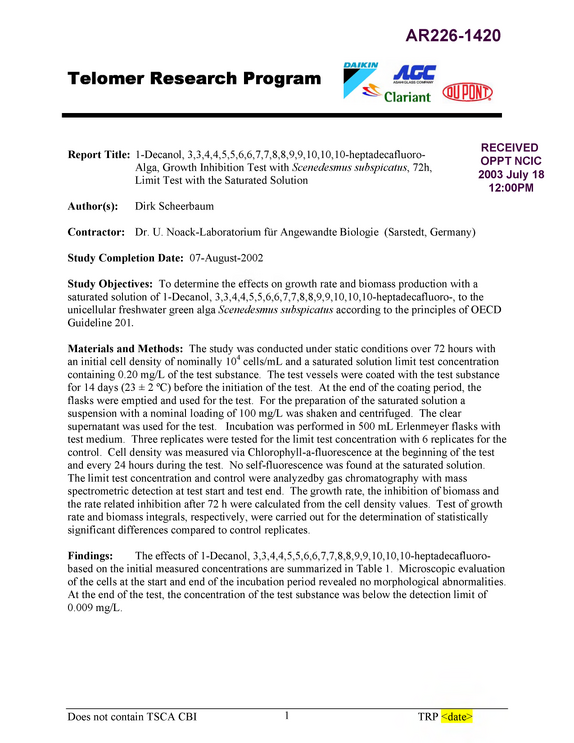
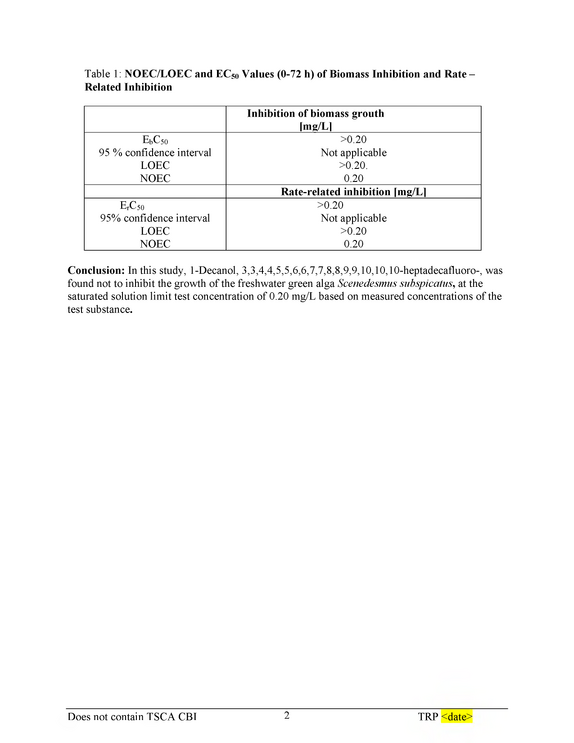
Telom er Research Program AR226-1420 Report Title: 1-Decanol, 3,3,4,4,5,5,6,6,7,7,8,8,9,9,10,10,10-heptadecafluoroAlga, Growth Inhibition Test with Scenedesmus subspicatus, 72h, Limit Test with the Saturated Solution Author(s): Dirk Scheerbaum RECEIVED OPPT NCIC 2003 July 18 12:00PM Contractor: Dr.
refid# 6w0Bz0VewNR7XjekDyqYLj5e62 pages
RECEIVED 03 P pOJ JUL2L p p IP AHII !
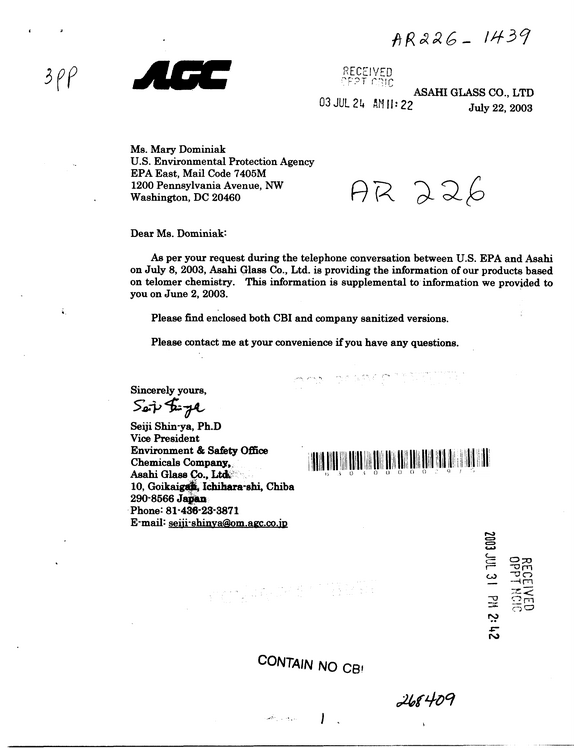
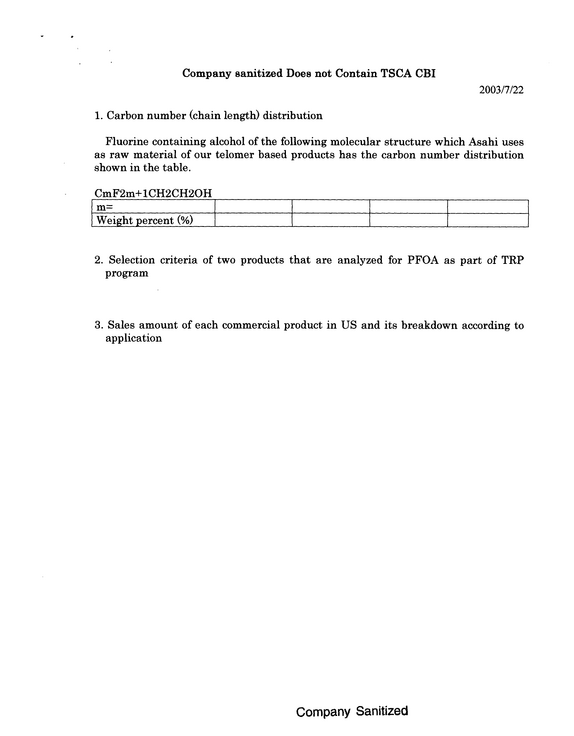
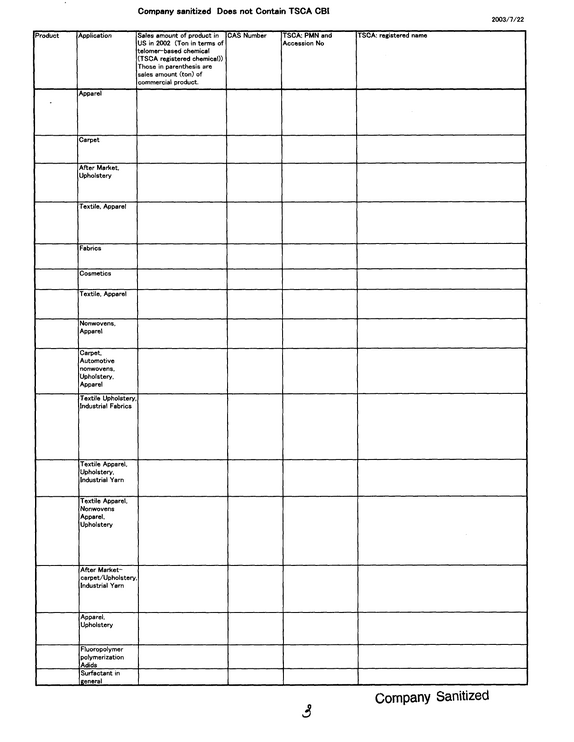
refid# qmpvd5wzNBLgLzxr66V8EvMeG3 pages
troirrnenia Working Group jj PPCs und Pi'OA: A 'troubled class ofchemicals used to ScotcMiard.
refid# m7Y8eK8L3OZdKarMMyEJnJ7B68 pages
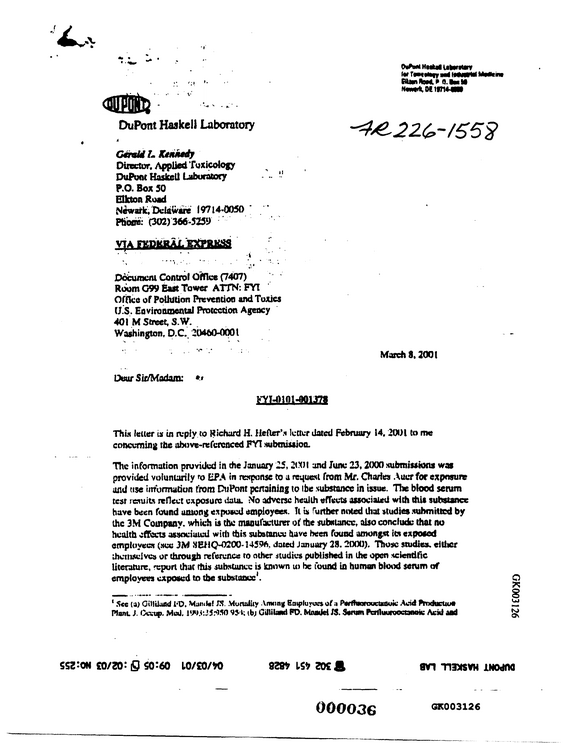
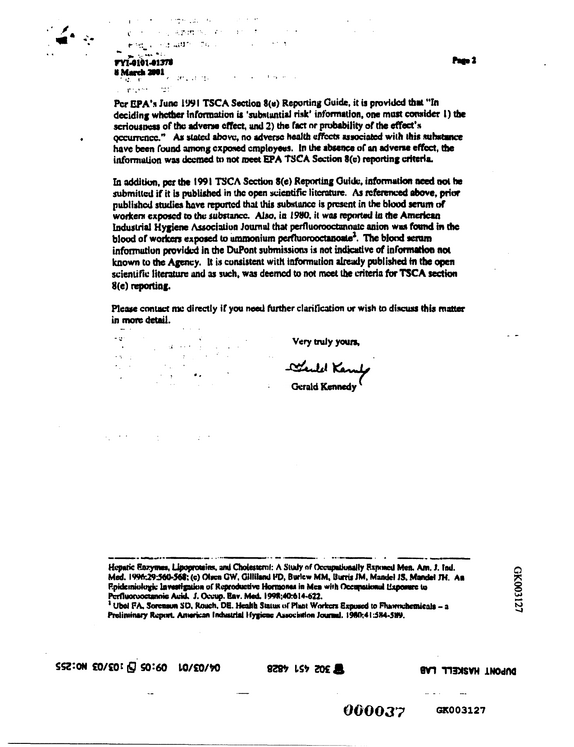
0PmMHatkal Ukarrtarv 1 BUS(B^hiBSSStSBUiB^iB RUbAob4 * O.Bm M Nbwb* D1I 71M W DuPont Haskell Laboratory G tn id L Ktnktdy Director, Applied Toxicology DuPont Haskell Laboratory P.O.
refid# LgRwY35w4aD9xmmOprkZX2jmd2 pages
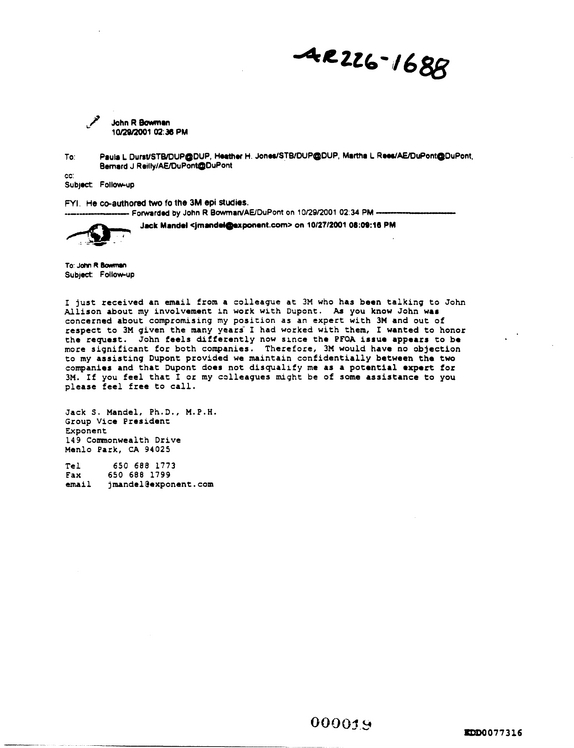
From: Bernard J P e d y on 10/07/2001 09 55 AM To Marttie t.
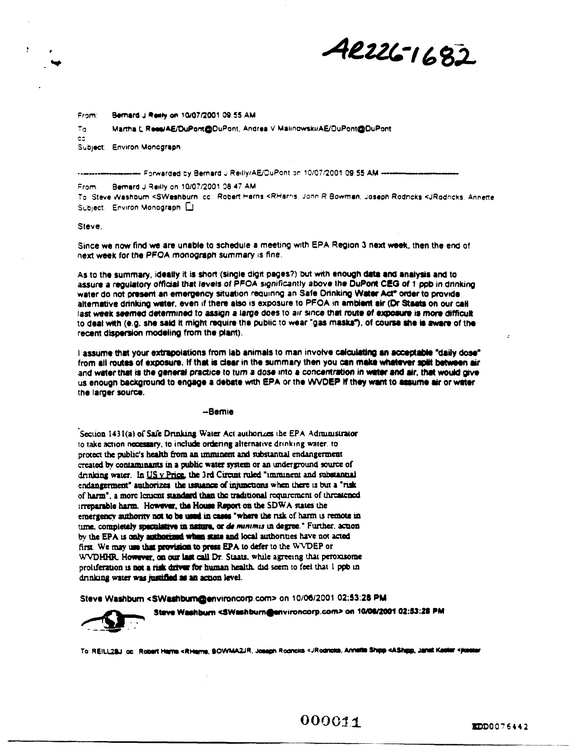
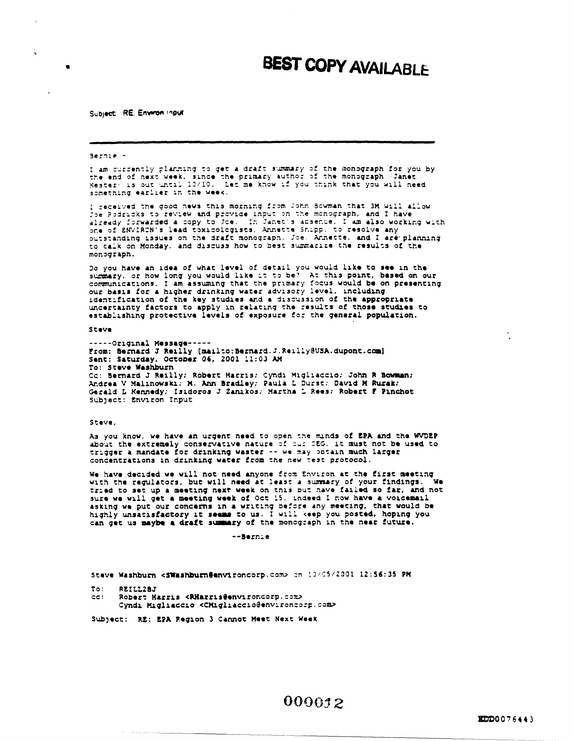
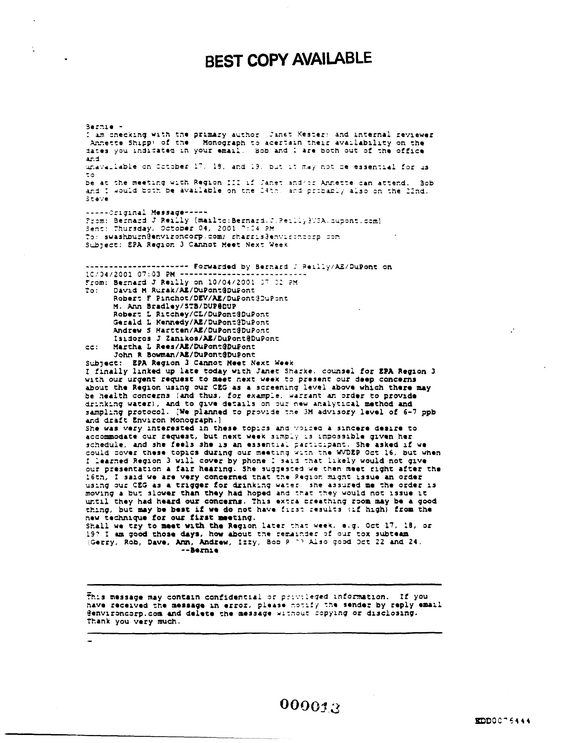
refid# 0qDBR5K2qxdGBnVOQ3xa4ng2k3 pages
J ?
refid# 0q0YX68mvj0YqmqXGp02Y6Vpk1 page
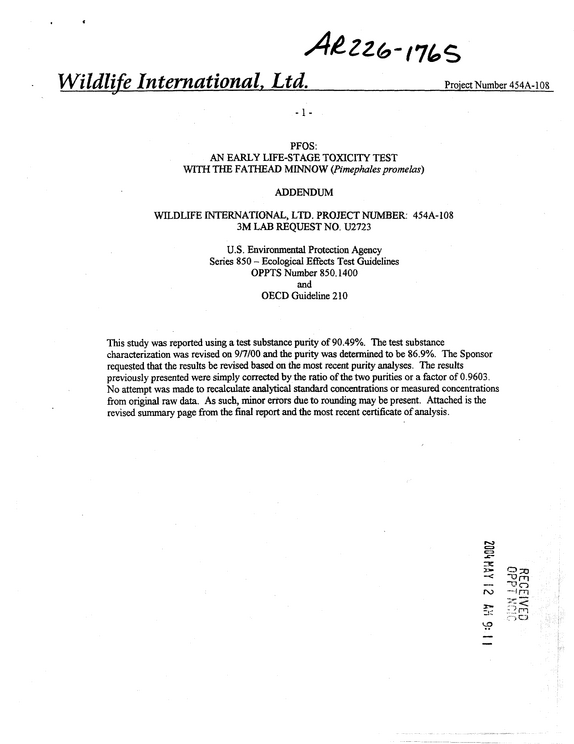
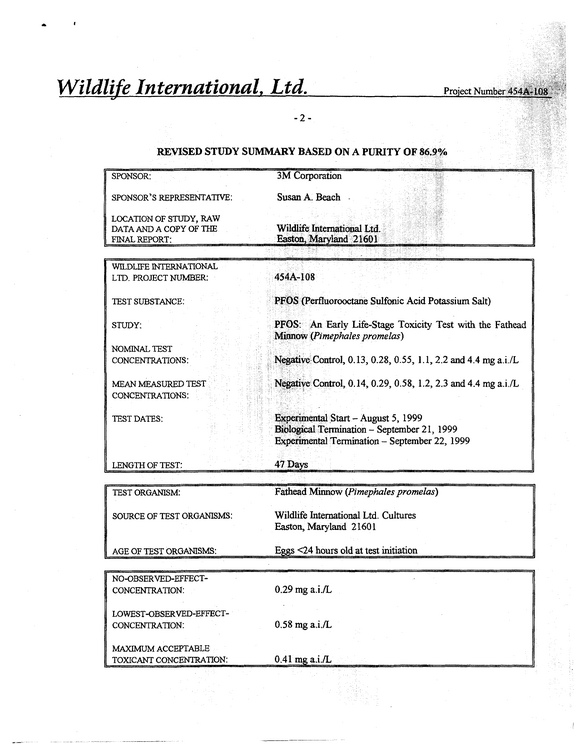
A&ZZb-f 7S W ild li fe International, Ltd.______________ __ _________Project Number 454A-108 - 1- PFOS: AN EARLY LIFE-STAGE TOXICITY TEST WITH THE FATHEAD MINNOW (.Pimephales promelas) ADDENDUM WILDLIFE INTERNATIONAL, LTD.
refid# jB27g12YE7EgYyRKYb29qYDq97 pages
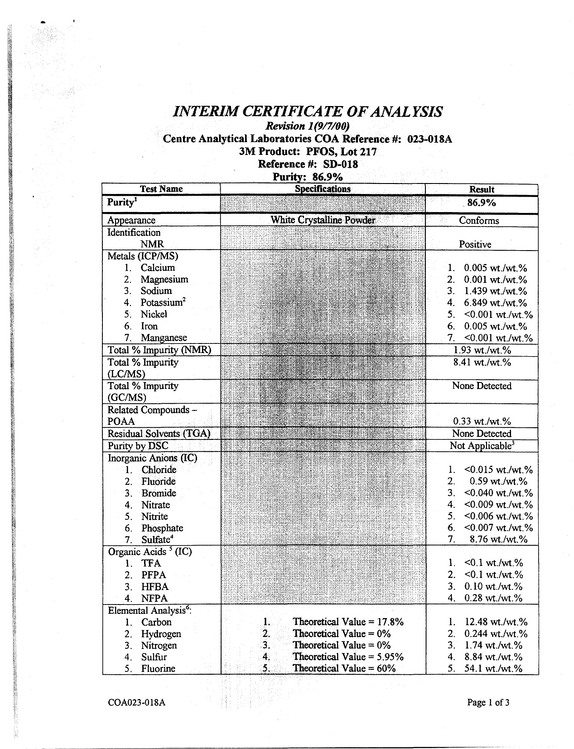
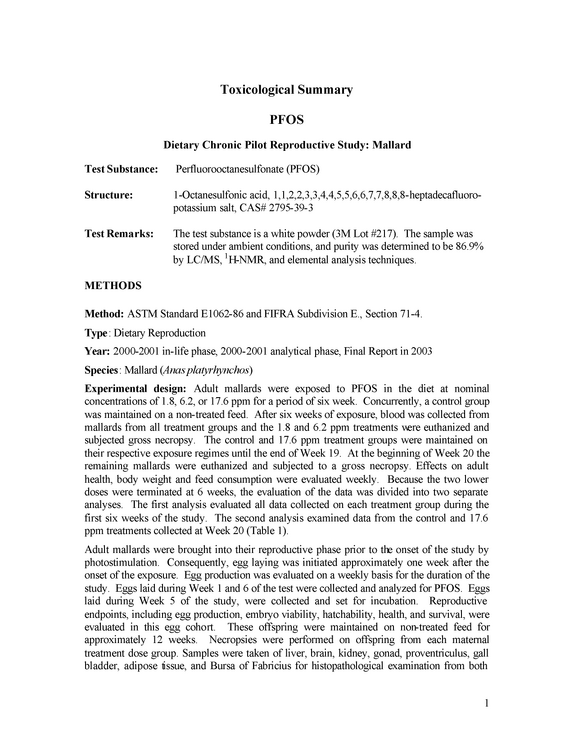
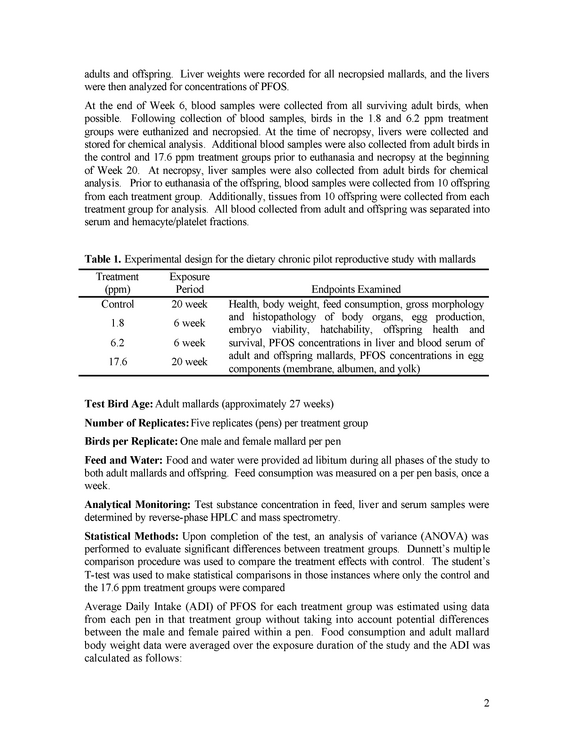
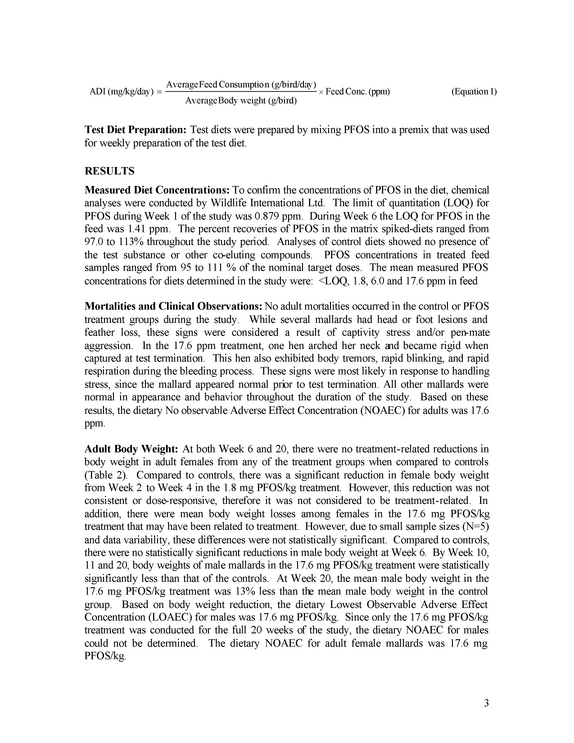
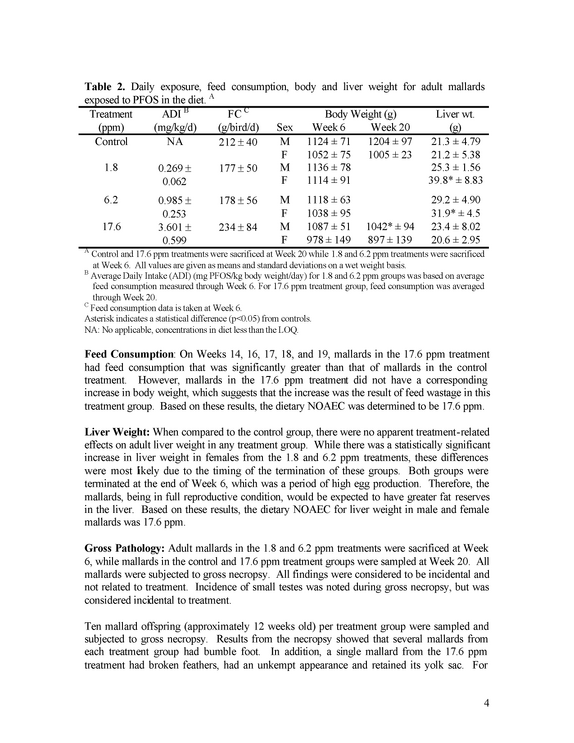
Toxicological Summary PFOS Dietary Chronic Pilot Reproductive Study: Mallard Test Substance: Perfluorooctanesulfonate (PFOS) Structure: 1-Octanesulfonic acid, 1,1,2,2,3,3,4,4,5,5,6,6,7,7,8,8,8-heptadecafluoropotassium salt, CAS# 2795-39-3 Test Remarks: The test substance is a white powder (3M Lot #217).
refid# 8RE0E72zymNoXM7ZN8RyGeJoa12 pages
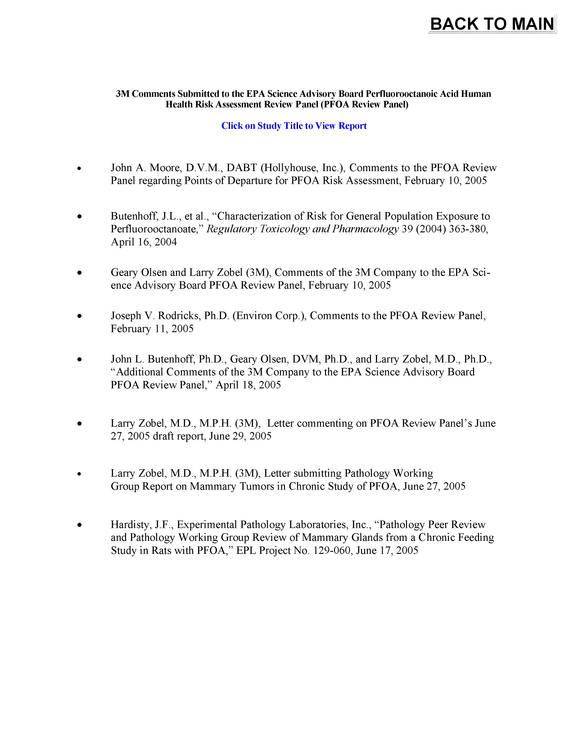
BACK TO MAIN 3M Comments Submitted to the EPA Science Advisory Board Perfluorooctanoic Acid Human Health Risk Assessment Review Panel (PFOA Review Panel) Click on Study Title to View Report John A.
refid# qapo2xyRXb77r1zEZ4K3dJxNq1 page
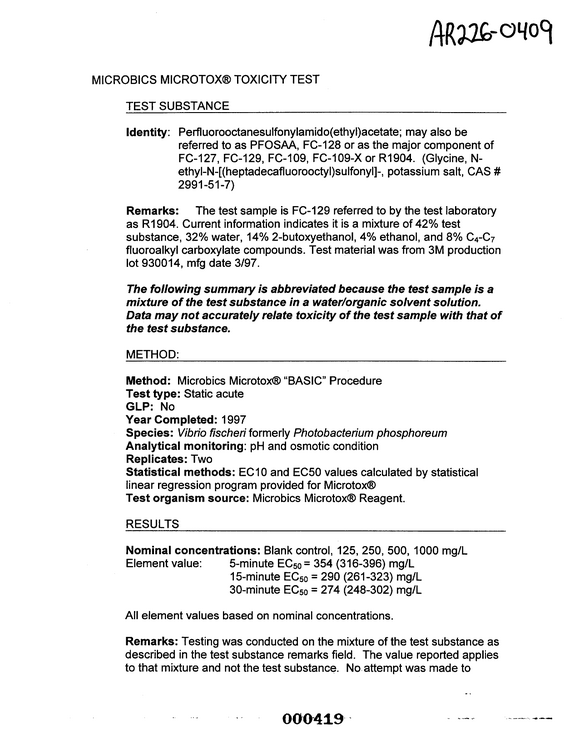
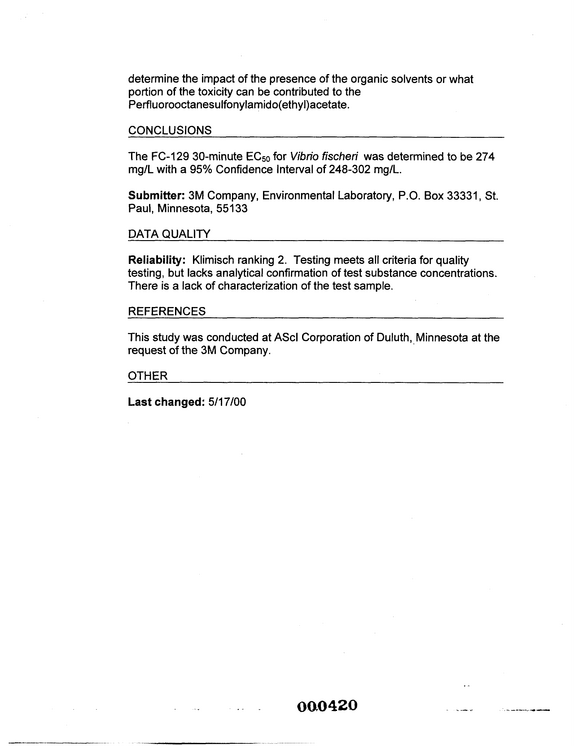
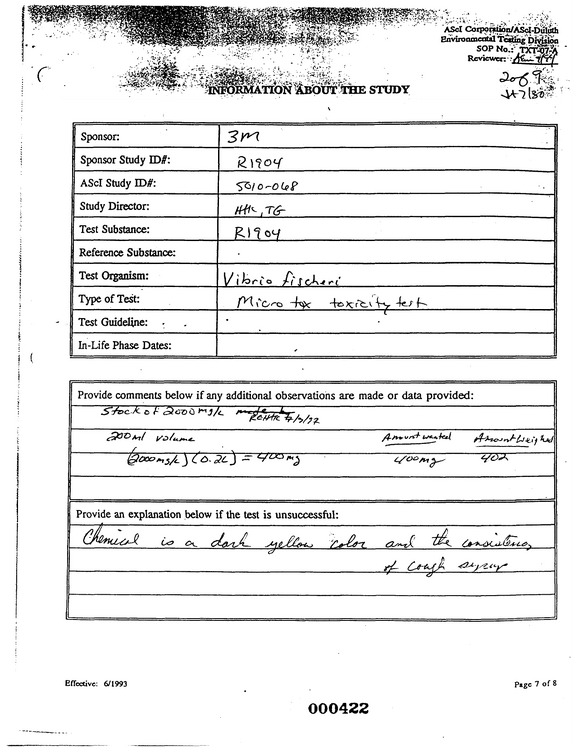
P M X S rO H 0 <\ MICROBIOS MICROTOX TOXICITY TEST TEST SUBSTANCE Identity: Perfluorooctanesulfonylamido(ethyl)acetate; may also be referred to as PFOSAA, FC-128 or as the major component of FC-127, FC-129, FC-109, FC-109-X or R1904.
refid# bB4bEBmp3ovE90yXL126QQdr113 pages
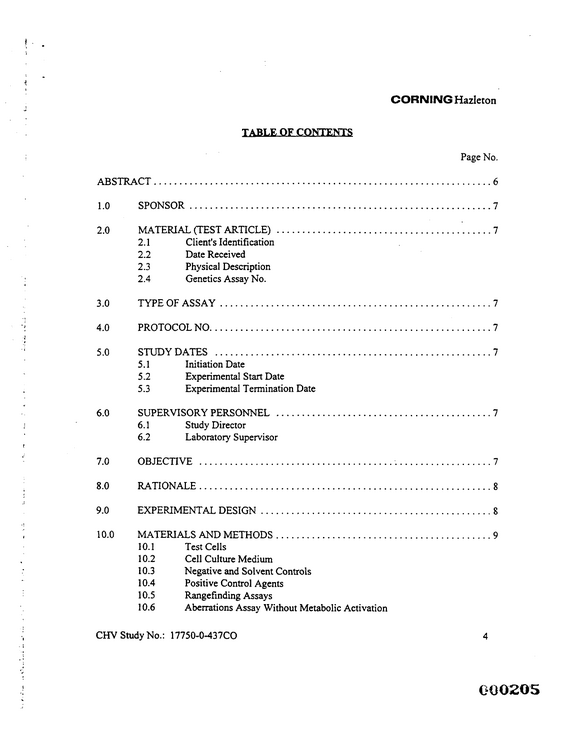
ARm-oM3l i C O R N IN G Hazleton MUTAGENICITY TEST ON T-6564 MEASURING CHROMOSOMAL ABERRATIONS IN CHINESE HAMSTER OVARY (CHO) CELLS: WITH A CONFIRMATORY ASSAY WITH MULTIPLE HARVESTS FINAL REPORT AUTHOR Hemalatha Murli, Ph.D.
refid# x3qqNgjQBZ6a5eGXGKrjwDbg30 pages
9n&uM/iuiL B IO - T E S T JaJxm iotiei,, Jnc. 1810 f r o n t a g e r o a d NORTHBROOK.
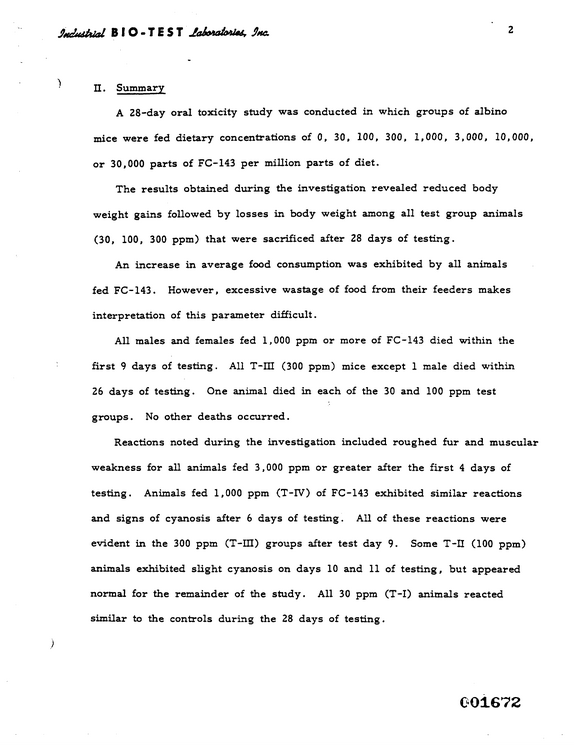
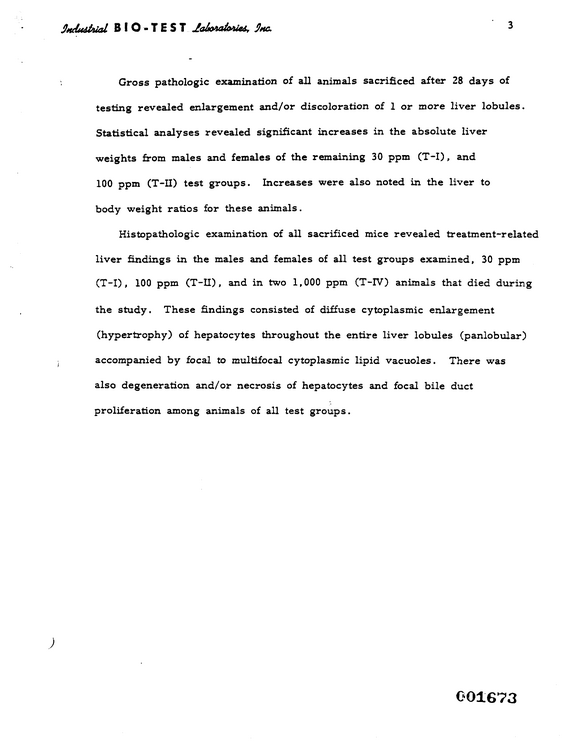
refid# v63RYNMrbOy3oOxQyZ0XE6dMY17 pages